
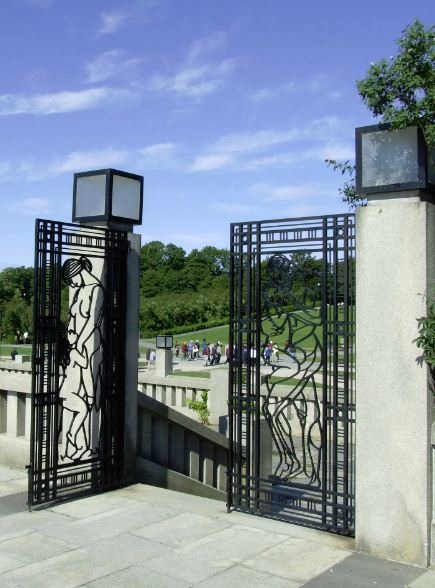
 I was going through my photograph collection from our cruise of the Baltic Sea and there were so many pictures that I had forgotten about. So I thought I’d post some more of the Frogner Park. Note that clicking on any of these pictures will allow you to see the full-sized original.
“The Vigeland Park or Frogner Park is a public park located in Frogner, Oslo. It consists of various bridges, fountains and statues by Vigeland. The Vigeland Park is the largest park in the city and covers 320 hectares. The area was ready for Gustav Vigeland fountain in 1924 and the final plan was released in 1932 by the city-council. The park covers 80 acres (320,000 m²) and features 212 bronze and granite sculptures created by Gustav Vigeland.
 Together with the gates which are forged of granite and wrought iron, the Main Gate serves as an entrance to the park itself. It consists of five large gates, two small pedestrian gates and two copper-roofed gate houses, both adorned with weathervanes.” ~ Wikipedia
A park like this could not exist in the United States because of the prevailing Puritan ethic. But as we strolled through this lovely and fascinating park, the crowds were huge. Parents, children, and the elderly wandered freely talking, enjoying the sun, and viewing the fantastic sculptures.
“In 1921 the City of Oslo decided to demolish the house where Vigeland lived and build a library. After a long dispute, Vigeland was granted a new building from the city, where he could work and live: in exchange, he promised to donate to the city all his subsequent works, including sculptures, drawings, engravings and models.
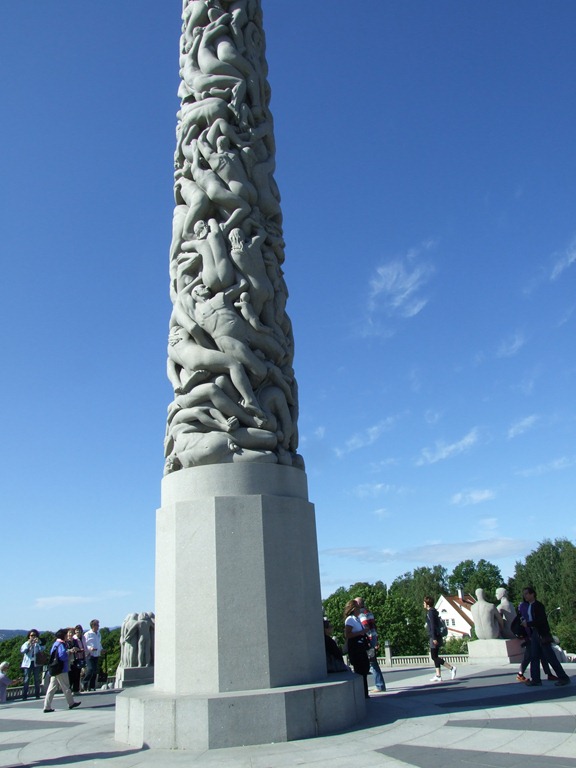
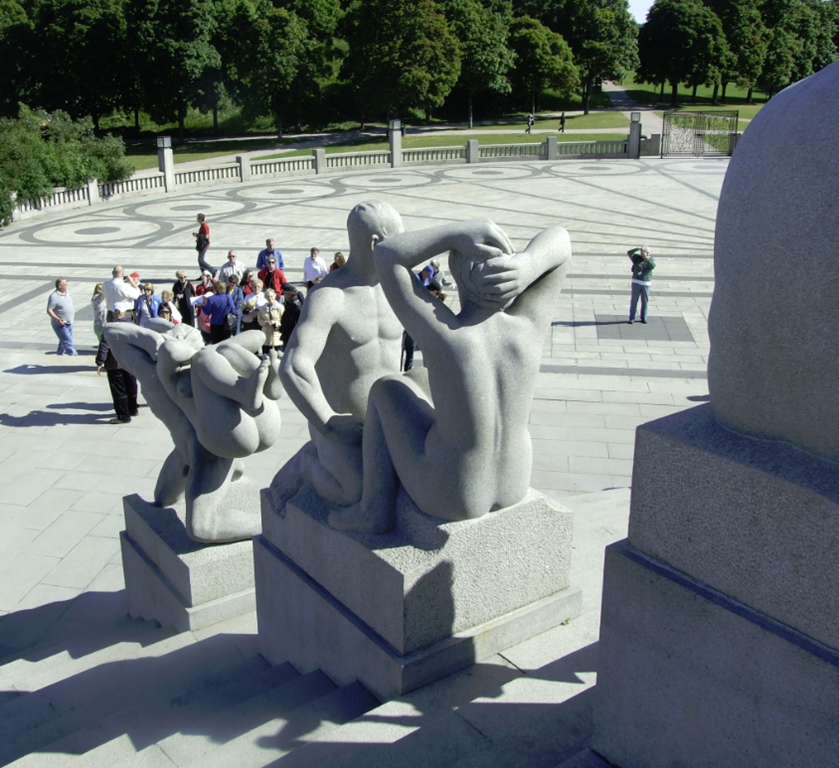
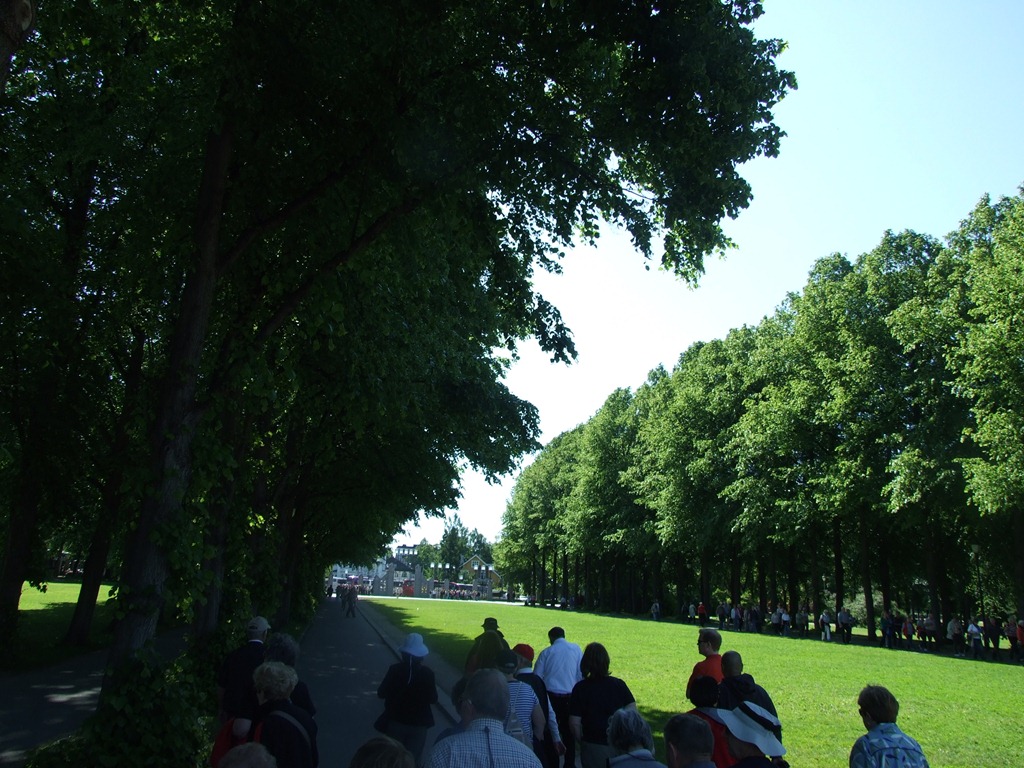
Vigeland moved to his new studio in Nobels gate in 1924. It was located in the vicinity of Frogner Park, which he had chosen as the definitive location for his fountain. Over the following twenty years, Vigeland was devoted to the project of an open exhibition of his works, which later turned into what is universally known as Vigeland Park.” ~ Wikipedia
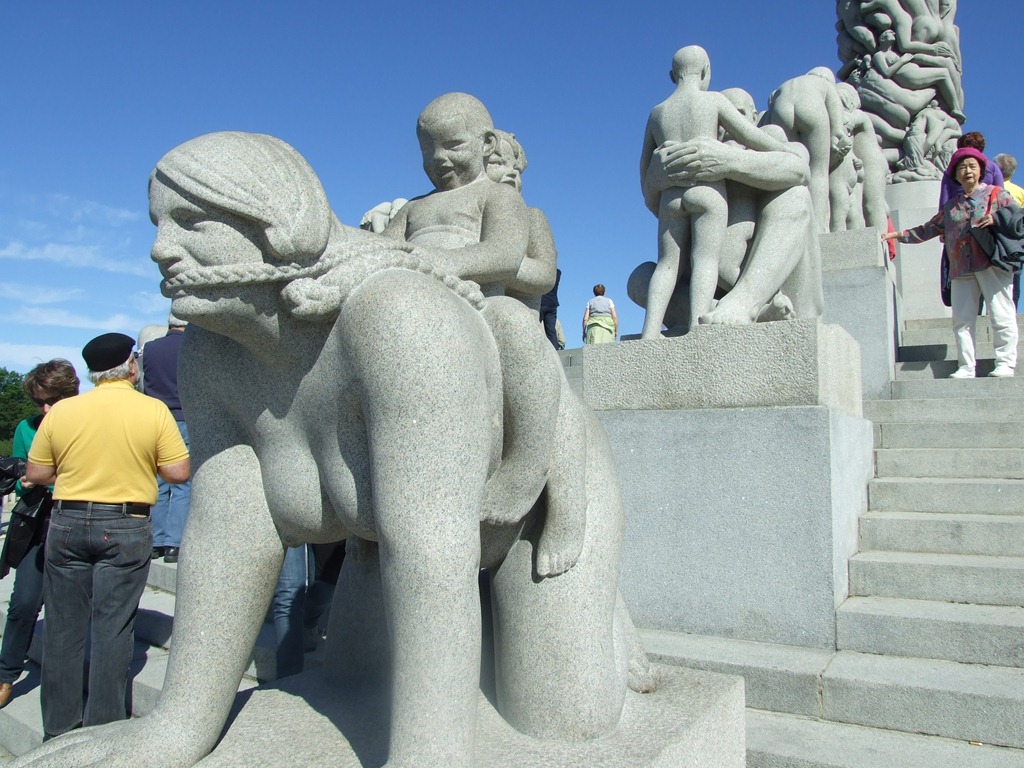
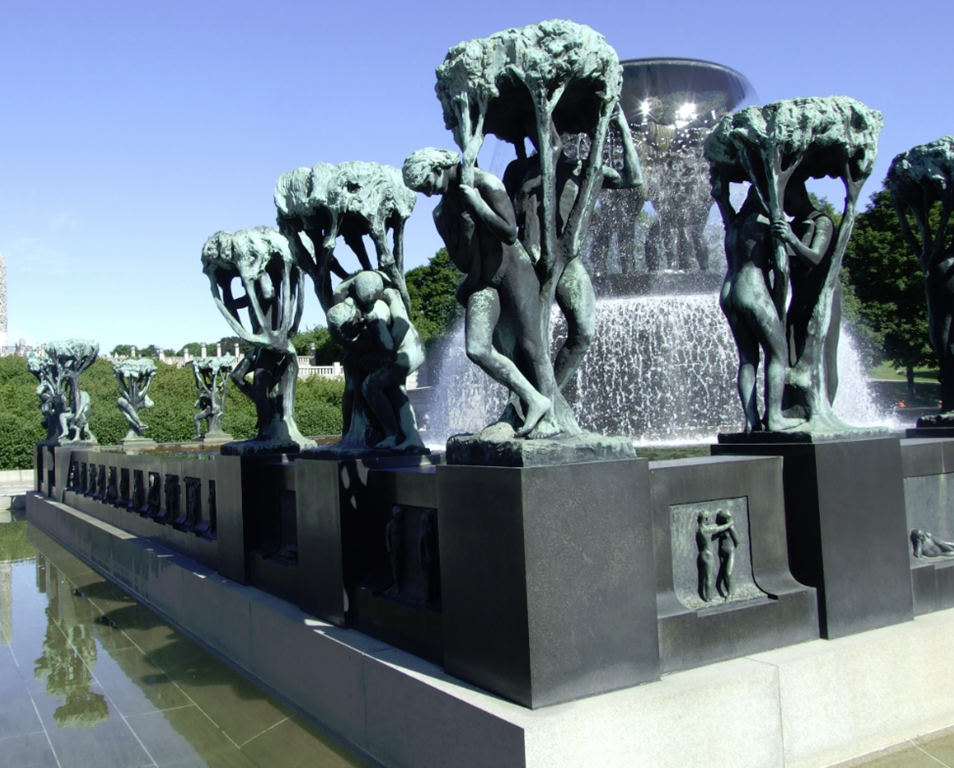
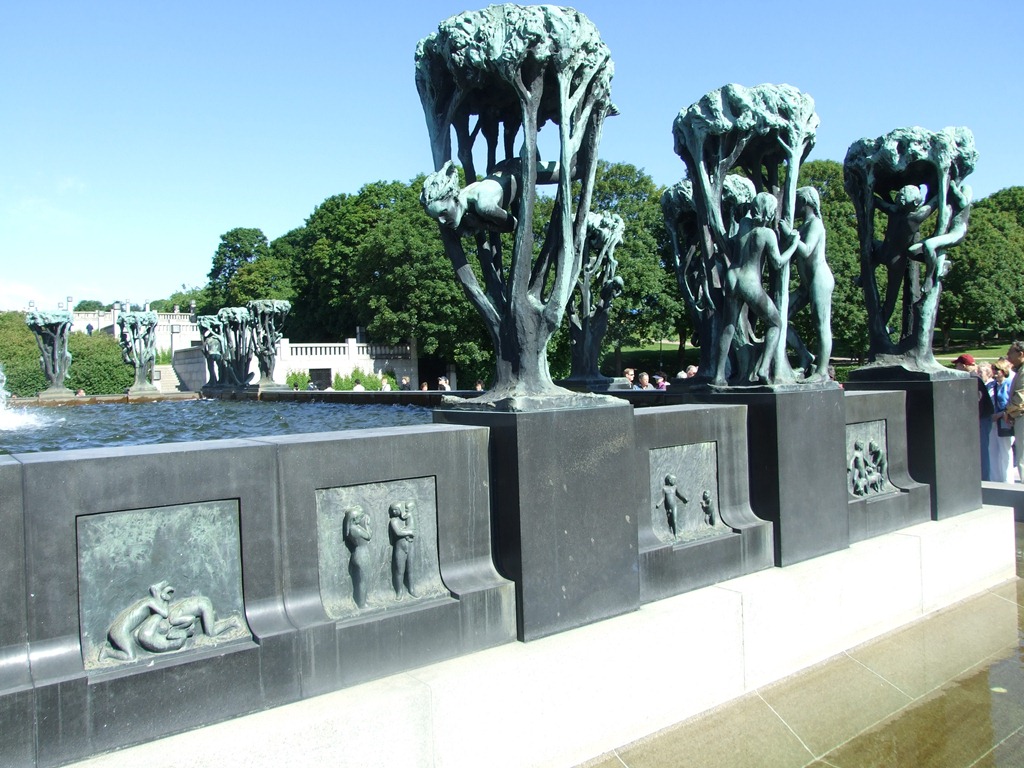
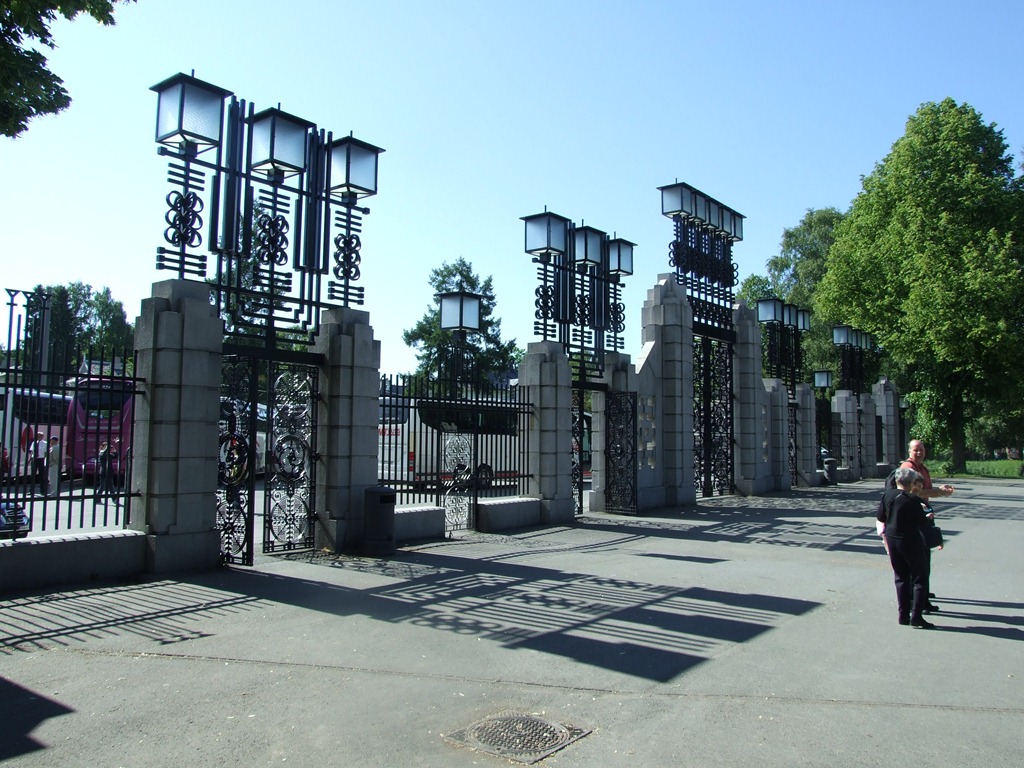
In the middle of the 18th century Hans Jacop Scheel, then owner of the area, formed a garden. It was expanded by the people that followed him, starting with Bernt Anker who bought Frogner Hovedgård and the surrounding area in 1790 and expanded the main building. Benjamin Wegner took over the property in 1836 and he transformed the park into a romantic park around 1840. Later, most of the property was sold to private owners and the Kristiania kommune bought what was left. The kommune decided around 1900 to make a park for recreation and sports.
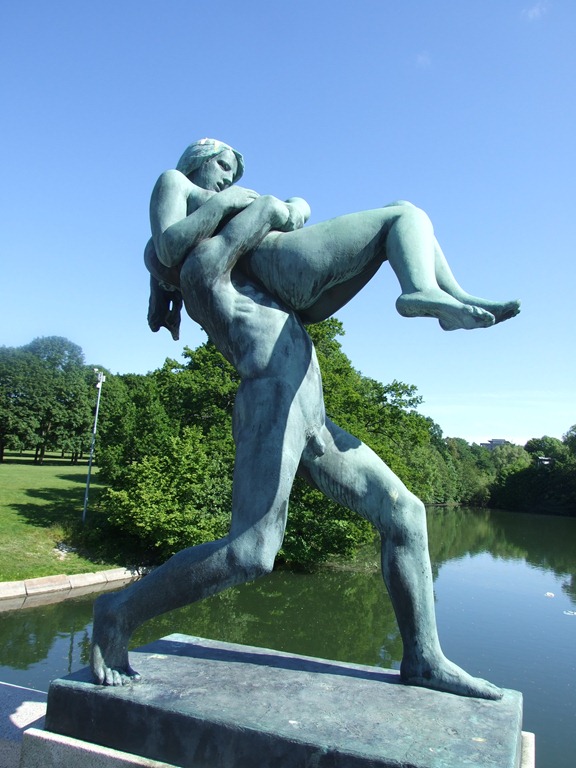
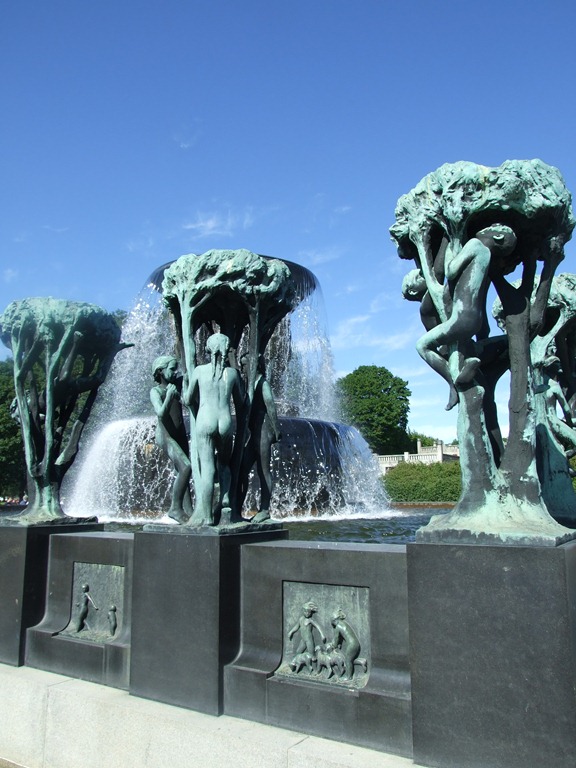
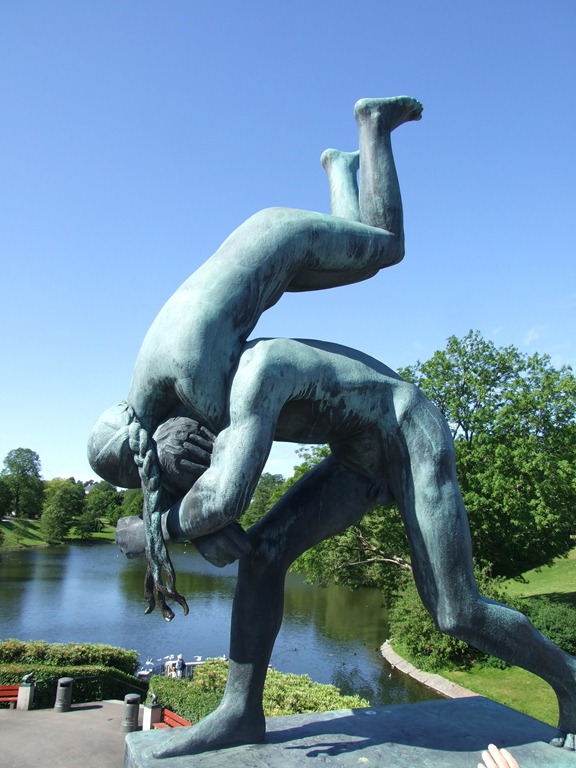
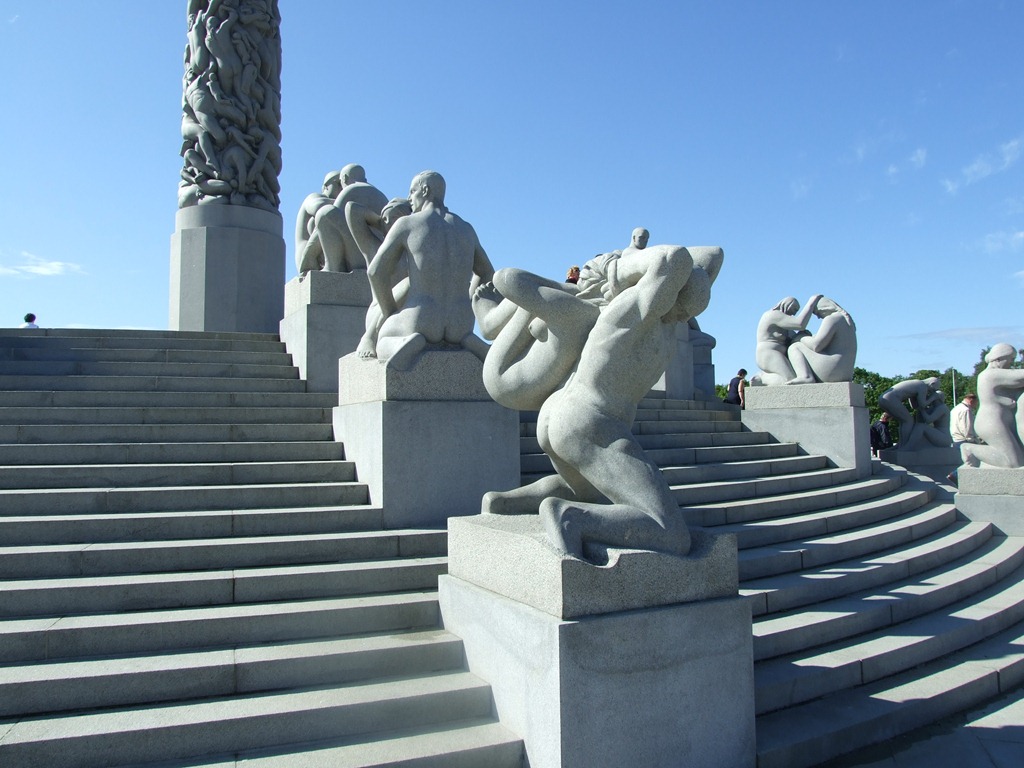
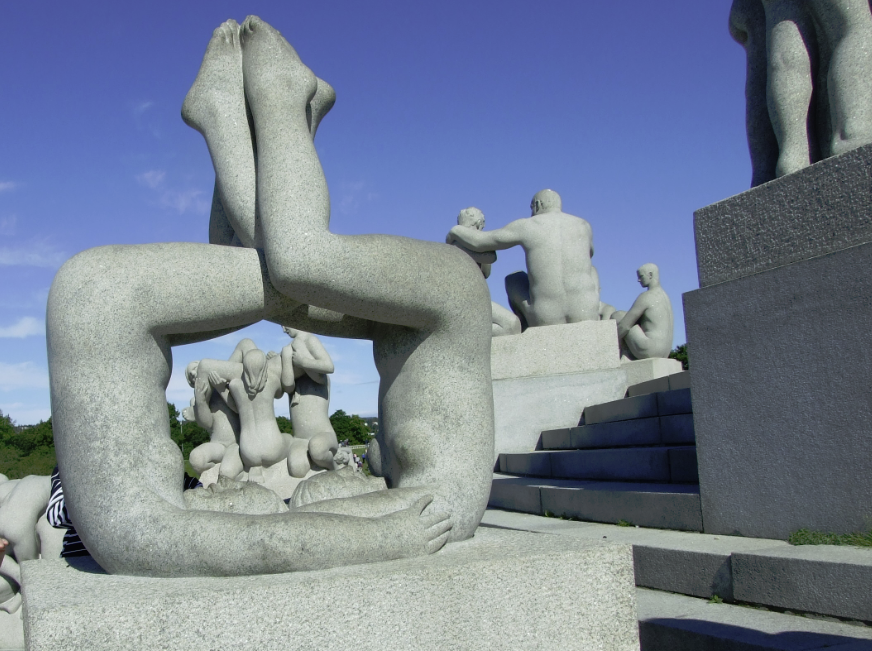
Frogner Stadium was opened near the road and the area near the buildings were opened to the public in 1904. The jubilee exhibition in 1914 was held in the park. The kommune decided that Gustaf Vigeland’s fountain and all his monuments and statues should be placed in the park. Most of the statues depict people engaging in various typically human pursuits, such as running, wrestling, dancing, hugging, holding hands and so on. However, Vigeland occasionally included some statues that are more abstract, such as the “Man attacked by Genii” statue, which shows an adult male, fighting off a horde of putti-like mythological figures.
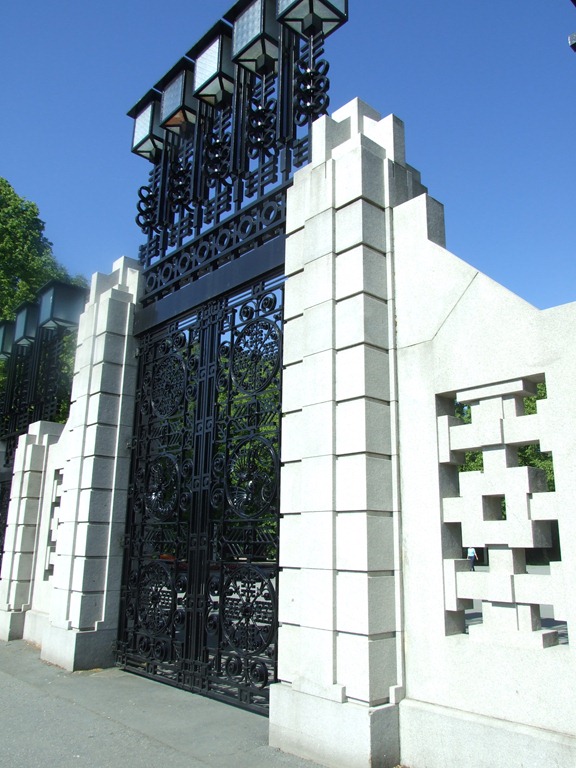
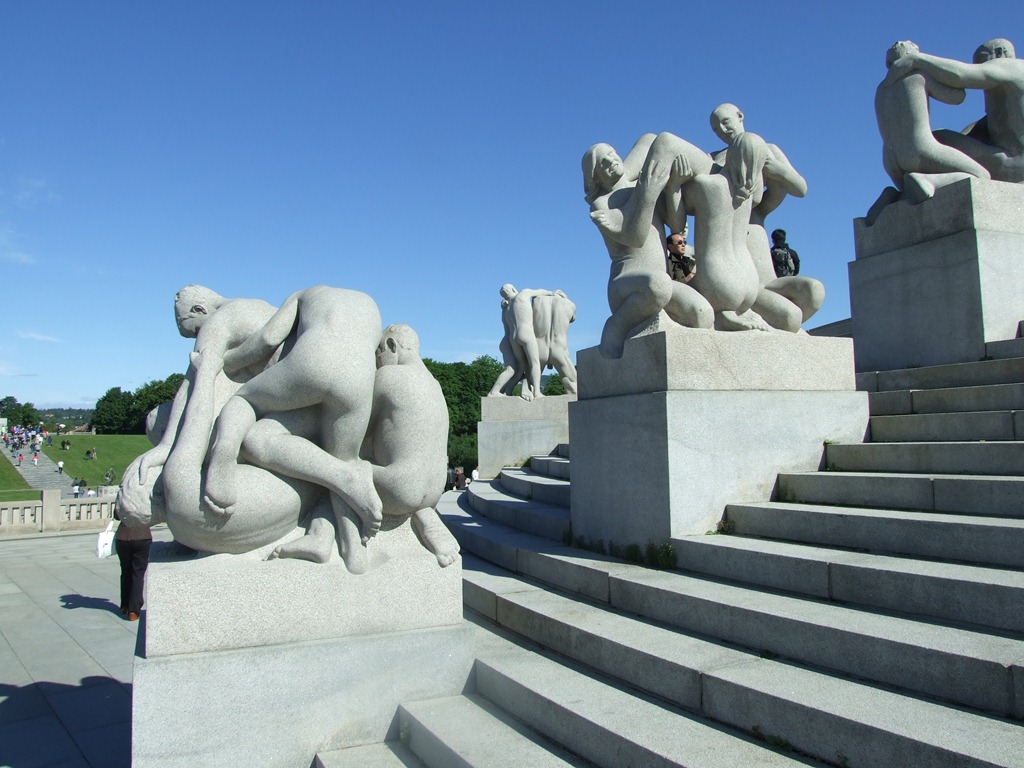
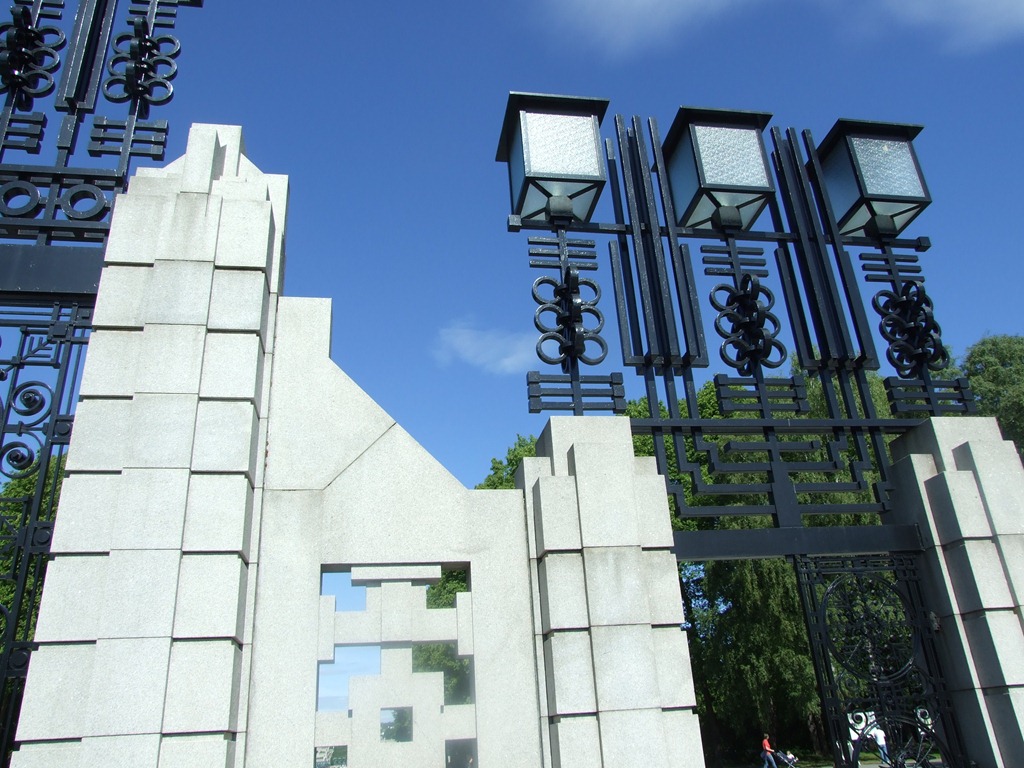
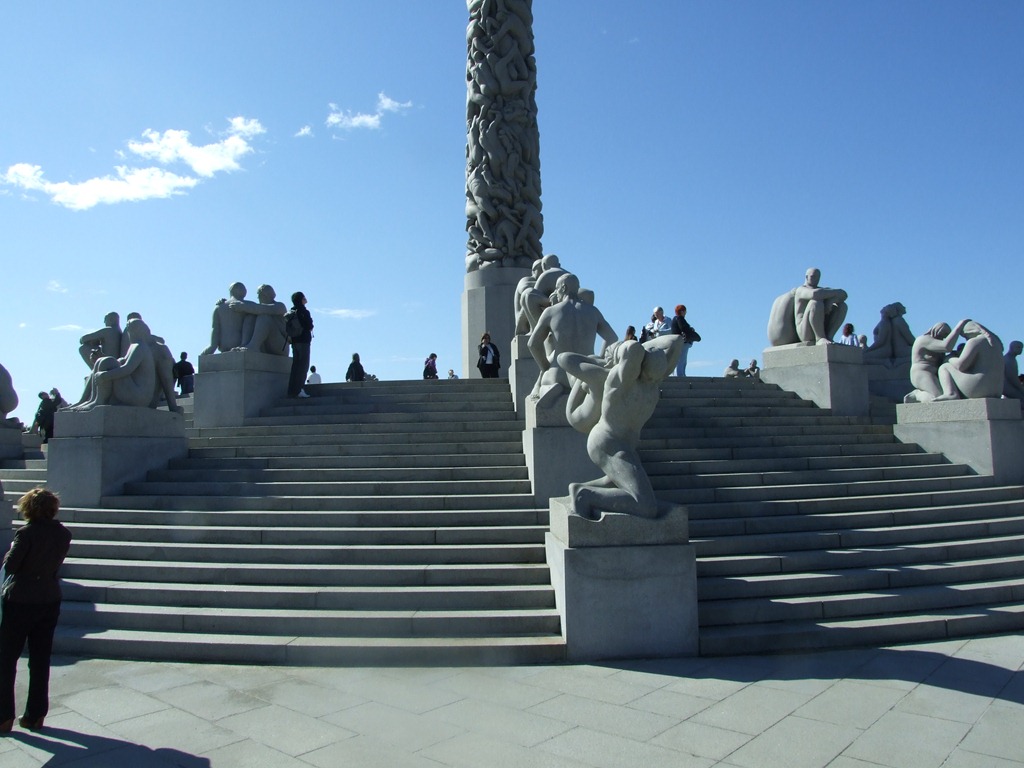
Vigeland park is a well known picnic area, popular in the summer for sunbathing, games, and relaxation. It is also one of the most interesting places we visited that week.





 The Bis Key Chronicles
Pingback: Gustav Vigeland: Frogner Park in Norway | The Bis Key Chronicles | Today Headlines
more interesting than the
vietamese one