It’s only a calendar…

This time of year I get to thinking about time and calendars. One of my projects, well one that I have been thinking about for a couple of years, is to save all my calendars and reuse them as they become lined up again. So how many years of calendars would you have to save? Well it turns out there are fourteen if you believe Wikipedia.

  But this chart shows seven working just fine. So for the year 2007, you could use the 1979, 1990, 1996, and 2001 calendars if you had them. I’m not sure how the leap year phenomenon works into this but then I’m guessing that if I started to save calendars or read more I could figure it out.

Not all calendars would lend themselves to this saving plan. For example, the one in our kitchen is so marked up with Suzy‘s and my schedules that they are unusable after the year ends.

And then there is the calendars at work, where this year I used my favorite pictures of Coleman Hawkins for four months until Coltrane‘s pic came up. So that calendar has been cut up too much to reuse.

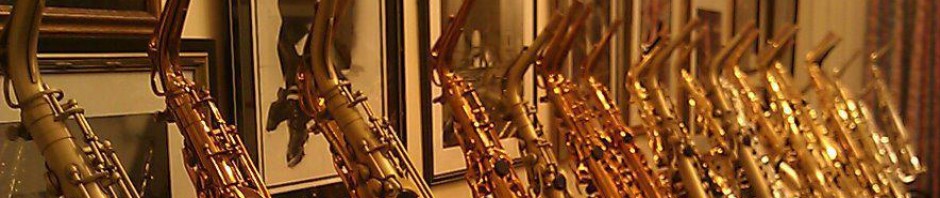
And who knows, maybe the special calendars that I adore this year, with pictures of saxophones including a number of pictures I took myself, will not be as interesting to me in 2012 when the calendar can be reused. Hey, it could happen!  ;o)

Posted in Everyday Science | 2 Comments

How do Seattle and Salt Lake City Differ

I purchased the Statistical Abstract of the United States, which comes out every year. The facts and figures from the U.S. are very interesting to me albeit sometimes disappointing. For example, the 1996 version, which is the one I have, says that for my year group, only 9.2 percent of the population has an advanced degree (something above a bachelor’s degree). The hightest dropout rates were in the southern states with Florida and Gorgia having the highest at over 14 percent. The lowest around 4 percent was found in Minnesota and North Dakota. Maybe being cold in the winter drives students to get that degree?

Phillip Longman‘s editoral, "What’s the difference between Seattle and Salt Lake City" notes that in Seattle there are nearly 45 percent more dogs than children. In Salt Lake City there are nearly 19 percent more kids than dogs. This curious fact might at first seem trivial, but it reflects a much broader and little-noticed demographic trend that has deep implications for the future of global culture and politics.

It’s not that people in a progressive city such as Seattle are so much fonder of dogs than are people in a conservative city such as Salt Lake City. It’s that  progressives are so much less likely to have children. It’s a patter found throughout the world, and it augurs a far more conservative future–one in which patriachy and other traditional values make a comeback, if only by default."

Has anyone read "The Marching Morons" by C. M. Kornbluth? "The story is set hundreds of years in the future: the date is 7-B-936. A man from the past put into suspended animation by a freak accident, John Barlow, is revived in this future. The world seems mad to Barlow until Tinny-Peete explains The Problem of Population: due to a combination of intelligent people prudently not having children and excessive breeding by less-intelligent people, the world is full of morons with the exception of an elite few who work slavishly to keep order. Barlow, who was a shrewd conman in his day, has a solution to sell to the elite." – Wikipedia

Posted in Everyday Science | Leave a comment

The Search for the Elusive Bass Sax Case

Okay, so obviously I finally found a hard case for my ’24 Buescher bass saxophone that I purchased last month. The sax in the picture is not my silver-plated beauty. It came in a gig bag (canvas) complete with a smashed tone hole, leaking key pads, and a munged octave mechanism (as reported earlier in this blog).

I’ve been looking for a case for this beastie and was having no luck at all. The usual suspects don’t make the cases anymore–there just wasn’t enough demand. So imagine my surprise when Lee Mason, a dealer from Oregon and compatriot from the Bass Sax Coop (a Yahoo forum) wrote to say he could get these!

Next week I’m gonna have Paul Woltz add a spit valve, shorten the neck, and tweak the E2 and C note productions. Then in less than a month I should have a SaxRax to hold my bass sax for home and my gigs.

That’s a lot of extra money to tweak, protect, and hold the instrument, but I figure this is a labor of love for an instrument that I will have the rest of my life.

My search for the mouthpiece for this beastie is still on going. I have a very nice Runyon Custom that Paul Coats has tweaked. I also have a new Vandoran and an original plubber (taint just plastic or rubber) piece that is unmarked. But last night after doing more research online I tried a baritone Otto Link Tone Master #5 (metal) and the bass sax is sooo much easier to play, taking less air and eliminating some weak note problems. 

I have a number of sax quintet music arrangements by Paul Coats that call for a bass sax. And the director of the Woodinville Jazz Ensemble sez he has some arrangement for our big band. So I should have some stuff to work on for the foreseeable future. I’ve got to say, it took me over six months to slay the soprano sax, even longer on the tenor sax (I started on alto sax) and the bass sax looks like it will not be as difficult. I should have known as the bari sax transition was a pick it up and love it experience three years ago.

Posted in Saxophone | 2 Comments

Expecting my new Selmer Bass Clarinet (to low C)

Some time during the end of January or the beginning of February, I expect to get delivery of this Selmer Paris Modele 67, low-C bass clarinet. I’ve been working mightily on my Leblanc Paris low-Eb bass clarinet and have finally made headway in the clarion range (mid-range) notes with the purchase of a Walter Grabner mouthpiece. This instrument, more than any I have tried to date, is very mouthpiece sensative.

Here are the specs:

System: – clarinet to low C:22 keys,
articulated G sharp,E-flat lever +E-flat
to the thumb,automatic octave key.

Silver-plated nickel silver and brass keywork.
Upper and lower joints in Grenadilla wood.
Silver-plated brass bell.
Bore:-upper joint:23,5 mm.
-lower joint:23,4 mm.
2 necks:one small bent,one larger bent.
Leather pads fitted with metal resonators.
Stainless steel needle springs.
Weight:-clarinet to low E-flat:2.9 kg.
-clarinet to low C:3.6 kg.
SELMER Paris C85 120 mouthpiece.
“Light ” case.

Chuck Kessler found this for me and at an incredibly reasonable price as it is being used by Selmer the many trade shows.

Posted in Clarinet | 1 Comment

Terry Talks about the “full Boehm” Clarinet

There seems to be some misunderstanding here about the purpose of the “full Boehm” clarinet. It has two distinct aspects that it covers:

1) The low Eb key allows for the performance of A clarinet parts on a Bb clarinet. That’s the only reason it was extended, similar to the extension of the “regular” bass clarinet from low E to low Eb. (Older basses from the late 1800’s only ranged down to E, but the obvious lack of A bass clarinets (few have been made over the centuries) and the obvious logistic difficulties in having both an A and Bb bass forced the issue there.
Most orchestral clarinet players have both an A and Bb soprano, so the need was not as pressing for the extension on the soprano. However, for those who wanted it, it was there.
I do not like the Bb in the staff that the low Eb key plus register key allows. Once in a blue moon, I will play a passing note in a fast passage that way, but for the most part it’s pinch for the fast passages and A and side trill key for the slow ones. Your mileage may differ.

2) The other elements of the “full Boehm” design are various keys added to make certain articulations more facile. They include:

LEFT HAND Eb LEVER:
This one duplicates the full key set up for both little fingers. It adds zero “complexity” to the instrument, and is recognized as a useful addition by makers today, often being offered as an option on the artist level instruments.

  ARTICULATED G# KEY:
This allows you to keep the G# key depressed while playing any notes below it, similar to that on the saxophone. Those who play the saxophone will welcome it, many clarinet players don’t like it since it has a pad operated by opposing springs, one that tends to stick a lot. (This can be cured by having a cork pad installed, by the way.)
The advantages are much more facility in extreme keys, combined with having a trill fingering for the G# (operated by the right hand) and (usually not mentioned, but very important in my eyes) an improved and correctly sized and sited G# tone hole that never collects any condensation. Disadvantages are that it is “complicated” (Compared to what? A bass drum perhaps…), that it adds “weight” to the instrument, and that it takes away one or two (depending on the horn) fingerings for notes up in the altissimo.

FORK Eb/Bb MECHANISM:
This is the added ring and vent key installed on the upper joint. It is a useful enough alternative fingering for a note for which a number of such fingerings already exist. I use it occasionally if an arpeggio will work better that way.
Plusses here are that the finger holes are now all set at the same height, and there’s not the tiny but noticeable irregularity when dropping or lifting the third finger, and that you have another alternative fingering for Eb/Bb. Minuses are that “it adds weight” and that the pad on the vent key is hard to set.

LOW Eb KEY:
(Added again here for consistence in the comparison department)
As discussed above, it enables you to get by with one clarinet when in an orchestral setting. It also offers a less than stellar Bb in the staff.
One other advantage that I’ve not seen aired very much is that the emission of the B in the staff through the tone through the body of the instrument “regularizes” the timbre of that note. In other words, you still get the “through the bell” tone quality of the bottom-most note on the horn and its twelfth, but since it’s not the E/B any longer, it tend to make “the break” not that big of a tonal issue.

Bad aspects are that it “adds weight”. Not much wrong with it other than that.
Most clarinet players will advise against any of this, but they usually do so without any practical experience that would lead them to know one way or the other. Few horns to actually handle translates out to few chances to experience the difference one way or the other.
From my perspective, the weight is a no brainer. But, I’m the guy who can play an extended range bass off of my thumb for substantial periods of time, so I might be a bit biased.
As for the other factors, the plusses far outnumber the minuses. Added complexity is a crock; I’ve never had one go out of adjustment in the forty years that I’ve been playing them. (If oboe players can manage with their instruments, surely we can deal with another two adjustment screws.) The few lost altissimo fingerings are more than balanced out by the added facility in sharp and flat keys (for the articulated G#), and the left hand lever has zero negatives and a ton of positives.

Regarding availability:
At one time, you could order (from Selmer, Leblanc and Heckel, at least) soprano clarinets with a progressive installation of these features. The usual order was 1)Eb lever; 2) Eb lever, articulated G#, 3) Eb lever, articulated G#, fork EB, and 4) “full Boehm”, with all of the above plus the low Eb extension. This sort of flexibility was available at least until the 1980’s, when my latest such horn (a 10S in Bb) was produced.

However, I personally own a Series 9 A clarinet with only the fork Eb mechanism, and an old Selmer pro horn in metal that has only the fork Eb and the articulated G# (no side Eb lever), so there has been some variation over the years. And, while I know that these instruments have been produced in both A and Bb (as I own a pair of Selmer Series 9 sopranos of the “full Boehm” type), just how far the penetration of these options went is still a mystery.
In September, there was a Selmer Eb soprano with “full Boehm” keywork up for sale on eBay (from Italy, no less). So, it potentially was possible that such options were offered on the entire line of horns from Selmer.

Want to buy one now? Your options are pretty limited. The easy way out is to purchase an Amati “full Boehm” instrument, costing you about a thousand dollars new. You can have it in your hands in three days, and it will have all of the options thereon.

However, I’d advise against that route for a number of reasons. First off, the Amati instrument isn’t up to the horns produced by Buffet, Leblanc or Selmer as far as tone and intonation are concerned. I’ve not owned an Amati instrument, but I have tested one at some length, and they just don’t “get it”, plain and simple.

Second, the worksmanship (fit and finish) on the Amati horns is less than optimal. I only eyeballed the “Full Boehm” one, but I recently had some modification work done on my Amati “Oehler” clarinet, and the following items were noted:

I) The tone holes were chipped where the seats were milled into the body of the instrument. You had to take the keys off to see the problem, but it was very clear to me that a dull tool or tools had been used. One chip was a major flaw, only fixed by wood dust and superglue.

II) As shipped from the factory/distributor, the instrument was completely unregulated. I got it into playing condition using my local repair guy, but for complete regulation (involving setting the rings at the proper height for my fat fingers, it took some big time work. Things are much better now. If the relatively simple Oehler system keywork had these problems, one wonders how they would do with the Boehm.

Also, a key post (where one of the long “clapper” key arms on the lower joint stops) was simply press-fitted into the horn, and when the key was removed to make the ring adjustments, the post literally fell out of the horn. (It’s fixed now, however.) Based upon this fit and finish problem offered by an Amati horn, I’d be loathe to trust them to do it right for my main clarinet.

What to do? Well, you can’t easily order a new one, but there are many hundreds (if not thousands) of them out there somewhere, and sooner or later they are going to come up on eBay. I’ve recently bought an “everything but the low Eb key” “full Boehm” in Bb (Selmer Series 10S), and have been more than satisfied with the result. I had it overhauled, regulated and silver plated, and it’s now my “day to day” horn for non-classical stuff.

I have found that these instruments are more likely to be better cared for than a run of the mill R13 or Opus or Series 9, simply because the owner made an obvious effort to purchase something a bit more costly, and had a good reason for doing so. With the others, you’re likely to get a student horn, but with one of these it almost certainly was in the hands of a professional musician, who took better care of the instrument overall.

So, if I were taken in by the descriptions that I and others have offered hereon as to why “full Boehm” instruments are a good thing, I would look to eBay to acquire one rather than trying to purchase a new one from the few suppliers left. My opinion, of course…

__________________
Terry L. Stibal
Leader of Houston’s Sounds Of The South Dance Orchestra
Offering the music of yesterday, today and tomorrow…the way you want to hear it!
Visit us at www.sotsdo.com

Another fav of mine, Stephen Howard adds this:

Articulation describes a mechanism whereby a typically single key is broken into two parts that can act independently of each other. This means that the touchpiece ( the bit you press ) of the G# key is mechanically separated from the key cup. In normal use, when you press the G# touchpiece the G# key cup will open – giving you a G# ( or C#, depending on which octave you’re in ).

However, when you finger an F ( or a B ) the F key has a linking mechanism connected to the G# key cup which brings it down ( as though you’d released the G# touchpiece ). This allows the player to keep their finger on the G# touchpiece and let the F link mech do the work of closing the G# key cup – so that instead of having to move two fingers to switch between F and G#, you need only move the F finger.

Standard Boehm clarinets have been produced with articulated G# keys – it requires no additional touchpieces to work.

It sounds ideal, but there are some drawbacks – the additional mechanism can make the G# feel less responsive, and there can be problems with the G# pad sticking. This can be alleviated to some degree by the use of a cork pad. A significant advantage of the mechanism is that the G# tone hole is place on the top of the bore – thus dispensing with moisture problems. (Note: Thanks to Carl Baron for pointing out this addition to me. Carl, you rock!)
Posted in Clarinet, Music, Reference, Repair, Vintage | Tagged | 2 Comments

Pick a Response

Okay, now you are going to find out what a really weird sense of humor I have. I found this to be very funny, especially the first and last response.
* Thank you. We’re all refreshed and challenged by your unique point of view.
* The fact that no one understands you doesn’t mean you’re an artist.
* I don’t know what your problem is, but I bet it is hard to pronounce.
* Any connection between your reality and mine is purely coincidental.
* I have plenty of talent and vision. I just don’t care.
* I like you. You remind me of when I was young and stupid.
* What am I? Flypaper for freaks!?
* I’m not being rude. You’re just insignificant.
* I’m already visualizing the duct tape over your mouth.
* I will always cherish the initial misconceptions I had about you.
* It’s a thankless job, but I have a lot of Karma to burn off.
* Yes, I am an agent of Satan, but my duties are largely ceremonial.
* No, my powers can only be used for good.
* How about never? Is never good for you?
* You sound reasonable. It must be time to up my medication.
* I’ll try being nicer if you’ll try being smarter.
* I’m out of my mind, but feel free to leave a message.
* I don’t work here, I’m a consultant.
* Who me? I just wander from room to room.
* My toys! My toys! I can’t do this job without my toys!
* It might look like I am doing nothing, but at a cellular level I’m really quite busy.
* At least I have a positive attitude about my destructive habits.
* You’re validating my inherent mistrust of strangers.
* Someday, we’ll look back on this, laugh nervously and change the subject.
Truthiness: the quality by which a person claims to know something intuitively, instinctively, or "from the gut" without regard to evidence, logic, intellectual examination, or actual facts. – Cobert Repor
Posted in Humor | 1 Comment

Musicianship is like a Fractal…

"I am reminded of a old but true tale about Westerners in Japan. It is said that after one week they know everything there is to know about the culture, after one year they find that there is a bit more to it than they originally thought, and after ten years they realize that they know nothing about it.

Musicianship is like a fractal–the deeper you go into it the more aspects of it are revealed. What seems "perfect" today is revealed as just the first step tomorrow." – Kymarto on SOTW.

Posted in Music | 3 Comments

Brad’s Christmas Present of Music

 A close friend of my who is a stellar bass and guitar player gave me a CD that he cut last year. It has Christmas songs and the song you listen to on this site is an example of Brad Benefeld’s work. I can’t stop listening to the CD! It has become my favorite Christmas CD this year.

Two years ago it was Vince Guaraldi stuff. Then there was Kenny G’s Christmas stuff. Before that there was Mannheim Steamroll’s music. All of these selections are available at many sources including my favorite, www.amazon.com. But Brad’s isn’t publicly available.

I get a lot of music from semi-pro musicians who have another day job besides music performance. And where I work, there are so many college educated musicians, it makes you wonder. But learning music is like learning another language and people with an infinity for languages seem to do well in life in general. 

So you have to come to my site to hear the music. And maybe, just maybe, I’ll get Brad to post his CD to one of the online selling websites for your consideration. Or even better, maybe I can get him to join us on Microsoft Spaces with his own blog site. Cheers.

Posted in Music | 1 Comment

A Friend’s Purse is Stolen

A family member who is dear to us all had her purse stolen out of her car. She was in the habit of leaving her purse in her unlocked car every night. So the next day her husband got a call at work during a meeting from one of the credit card companies asking him if he knew her credit card was being used to by gas all over the metropolitan area!
 
There is no more crime-free places anymore–this is not Mayberry. So I am posting a few guidelines for my family and friends to consider. BTW, Seattle is now ranked six in the nation for vehicle theft and 12th in the nation for methamphetamine use. And our suburbs where we live are not insulated from those trends.
1. Never park your car outside of your house if you can secure it in the garage. If you must park outside, like at a mall, park in well lit areas.
 
2. Don’t leave valuables like a purse or computer in your car where a thief can see them. Some thieves will smash your windows just to grab a CD player!
 
3. Make your house appear secure. Have your driveway lights on at night, a deadbolt and security service sticker on the front door, a barking dog if you like them, and such. Most thieves will go to the next house, because there are always easier ones than yours IF YOU TAKE THESE STEPS.
There are so many other things you can do, but many times taking these steps will reduce your likelihood of being a victim significantly. Have a victim free day.
Posted in Security | Leave a comment

Steve Marcus

Steve Marcus is a roaring player! There is some Buddy Rich footage of him on YouTube. He should be mentioned with Liebman,Grossman and those guys. He takes a solo here and here. Weep, gnash your teeth, cheer, enjoy…
Posted in Jazz | 1 Comment