From the Facebook site Wild for Wildlife and Nature, this picture struck a chord with me this Sunday morning. Parents always have their children on their minds, even when they are not living at home anymore.
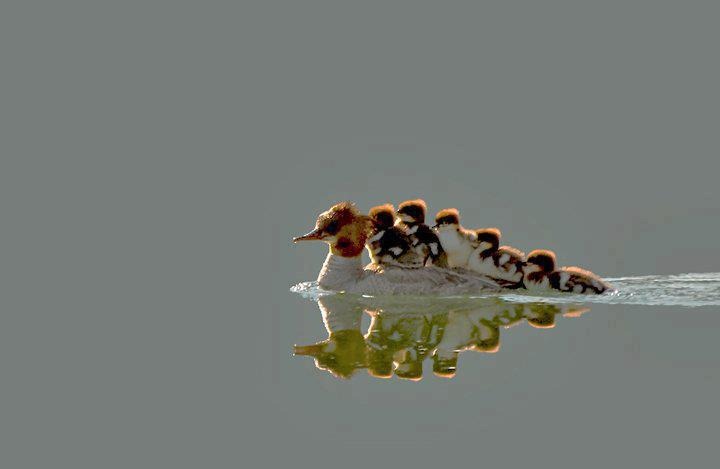
From the Facebook site Wild for Wildlife and Nature, this picture struck a chord with me this Sunday morning. Parents always have their children on their minds, even when they are not living at home anymore.
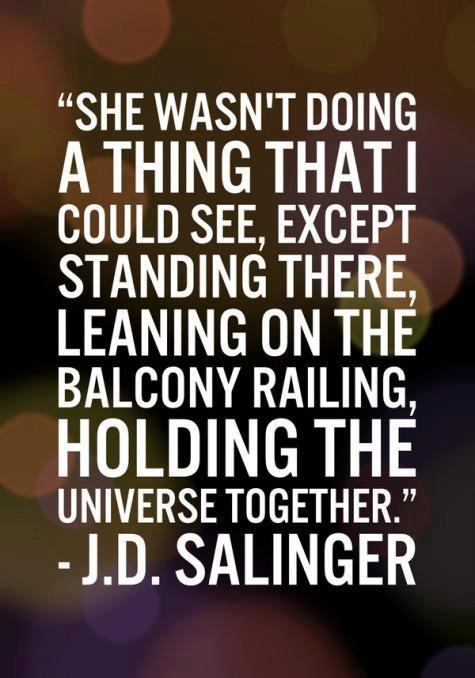 Jerome David Salinger was an American author, best known for his 1951 novel The Catcher in the Rye, as well as his reclusive nature. His last original published work was in 1965; he gave his last interview in 1980.
Raised in Manhattan, Salinger began writing short stories while in secondary school, and published several stories in the early 1940s before serving in World War II. In 1948 he published the critically acclaimed story “A Perfect Day for Bananafish” in The New Yorker magazine, which became home to much of his subsequent work.
In 1951 Salinger released his novel The Catcher in the Rye, an immediate popular success. His depiction of adolescent alienation and loss of innocence in the protagonist Holden Caulfield was influential, especially among adolescent readers. The novel remains widely read and controversial, selling around 250,000 copies a year.
The success of The Catcher in the Rye led to public attention and scrutiny: Salinger became reclusive, publishing new work less frequently. He followed Catcher with a short story collection, Nine Stories(1953), a collection of a novella and a short story, Franny and Zooey (1961), and a collection of two novellas, Raise High the Roof Beam, Carpenters and Seymour: An Introduction (1963). His last published work, a novella entitled “Hapworth 16, 1924”, appeared in The New Yorker on June 19, 1965.
Afterward, Salinger struggled with unwanted attention, including a legal battle in the 1980s with biographer Ian Hamilton and the release in the late 1990s of memoirs written by two people close to him: Joyce Maynard, an ex-lover; and Margaret Salinger, his daughter. In 1996, a small publisher announced a deal with Salinger to publish “Hapworth 16, 1924” in book form, but amid the ensuing publicity, the release was indefinitely delayed.
He made headlines around the globe in June 2009, after filing a lawsuit against another writer for copyright infringement resulting from that writer’s use of one of Salinger’s characters from The Catcher in the Rye. Salinger died of natural causes on January 27, 2010, at his home in Cornish, New Hampshire.
Source: Goodreads
Grandparents can be special in their own ways. The song in this video is Youth, done by the band Daughter.
“As far as we can discern, the sole purpose of human existence is to kindle a light in the darkness of mere being.” ~ Carl Jung
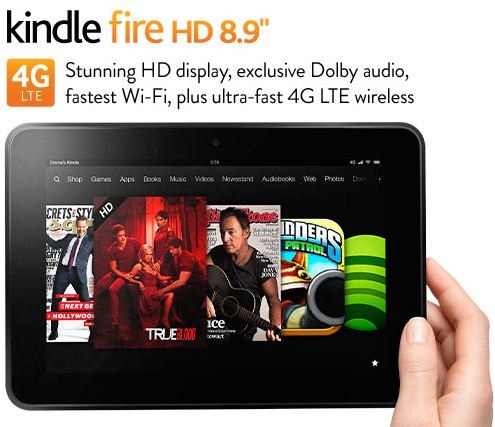 Back when iPads were the only viable tablet solution, Suzy and I purchased one each for a trip. We immediately fell in love with our tablets and never traveled without them. We even sprung for the pricy 3G version so that we weren’t tethered to a WiFi. We used these for two years.
Then, having been hired by Amazon, I decided to give the Amazon Kindle HD 8.9 4G a go. As an avid community transit user, this device needed to be able to provide me with an online solution as a traveler for 90 minutes to 2 hours a day. For me this solution has worked out better than I thought it would for what is really 1.0 version of a tablet.
Here is a YouTube review:
Tip du Jour: If you wanna go cheap, you can save ~$200 by not buying the 4G connectivity and only connecting up to your home and the free WiFi spots that are becoming more and more prevalent.
Tip #2: Get a cover to protect your Kindle when you are traveling. I sprung for this one. 
I luv the online magazines subscriptions, eBooks, and apps that I use. For example, did you know that the venerable Newsweek magazine is *only* available online now? Each new subscription pops up automatically on my Kindle carousel.
The battery life is excellent. I do plug it in every night, just like I do my phone. I just can’t imagine being without the device because the battery ran out. But I don’t think I’ve ever hit the halfway mark on the battery life indicator. My iPad II did not usually last a full day of use for me.
Now, all that said, the two best features are the lower price and not being tied to iTunes. I hope to be happy with this tablet for a couple of years. And then, as is my way, I plan to give it to a family member for further use.
“Treat your password like your toothbrush. Don’t let anybody else use it, and get a new one every six months.” ~ Clifford Stoll
 How do you manage all the passwords for computers? I’m sure most of you are familiar with the problem; at work most of us need 4-5 different passwords. In addition to that, there are passwords for your bank account(s), your credit cards, your utility accounts, cable, online gaming services, subscription web sites to name a few. I’m guessing the average socially active person and who works has over 20 passwords that they need to be able to remember at any computer.
The selection of passwords is further complicated because login requirements are sometimes mutually exclusive; some sites require special characters in passwords, others don’t support them, some require a password to be 8 characters or less, others 9 or more.
How can we manage our passwords. The requirements are:
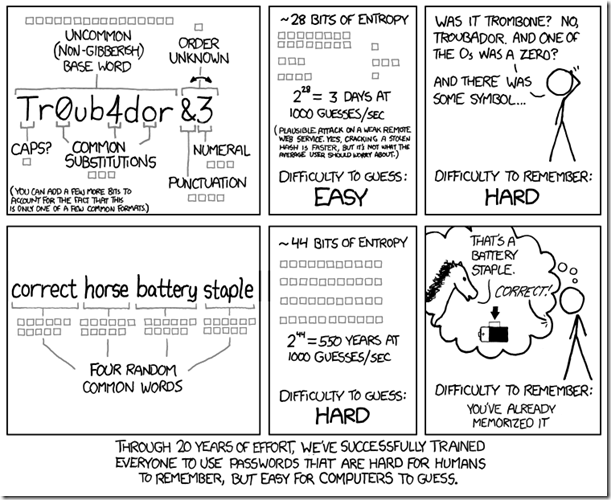
Picture from one of Geekdom’s favorite cartoons: xkcd.com
Possible solutions include:
Writing everything down in my password notebook. Conventional wisdom suggests that this is not a safe way to track passwords, but some of these people also designed current borderline-unusable password systems. Certainly my house gets burgled less frequently (currently never) than major websites and services who lose huge plaintext credential sets. (I currently write mine down using a code so that casual observers won’t know the password.)
Some kind of online or phone password manager. That’s like giving your passwords to someone to hold, someone you don’t know, and who says they’ll encrypt and protect them.
Here is what a friend of mine at work wrote. If I get his permission, I’ll add his name to this post. And I hope to try this out this weekend. It looks very promising.
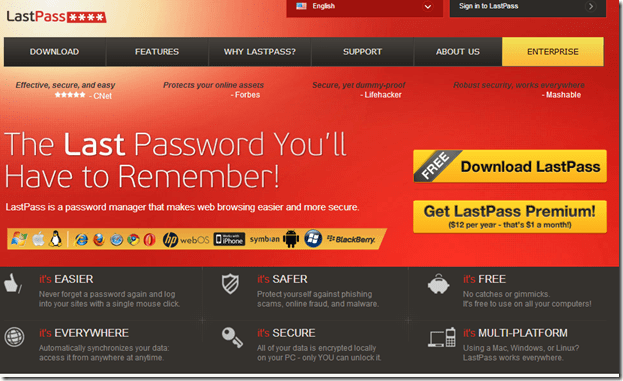
I use LastPass because it is so easy and secure. Useful for more than just passwords.
Disclaimer: LastPass is not approved for <work> internal use; but then nothing is at this point. However that doesn’t affect me because LastPass won’t work on Linux anyway, and we only use one password for almost everything. So I just have to remember two passwords- Lastpass, and my <work> password.
This will be a long post. So here’s the super short version:
Go download LastPass, and use a different randomly generated password for every site. If you do not, eventually someone will get your passwords, and it may or may not screw you over very badly.
Now here’s the nontechnical version:
LastPass is a password management system. You set a master password, which you remember and do not share or use for anything else, and then have it autogenerate, autosave, and autofill your passwords no matter where you are. You’ll never have to change it, and LastPass will take care of remembering all of the rest.
So with that said, here’s the downsides of it:
Now, here’s the upsides:
And more.
There’s basically 4 different ways to manage passwords:
So now, let me explain the technical theory behind this, and why LastPass is while other methods are not secure. This isn’t necessary to read unless you are interested in the technology.
Site security
First, how password security works. Suppose you go to some random site with a forum and want to sign up/post on it, although the concepts are the same on even large sites.
When you type in a password and click send, if you are not using https (the little lock in most browsers), your password is transmitted across the network as it is. Anyone who intercepts your data has your password. But while that isn’t that hard, it isn’t that common either.
So then the site receives your password. Even if they have the https lock, they get your real, raw password. Now a dishonest or stupid site will take your password and just store it in their database for later confirmation. If they ever get hacked(and they will if they are this dumb), your password is open for the hackers to use(or the malicious site owner).
Hashing
Most sites do not do that, though. They do something called hashing your passwords. What this means is that they take your password, “MyPassword7” and turn it into a hash, in this case “e1d0c43e61eebf0212f058d6cfe2b28e”. They save this, and then to confirm your password next time, they compare the hash. Hashes cannot be reversed- Like adding two numbers together, there are many possible ways to get to a hash(2+2=4, 1+3=4, 0+4=4 for example), and thus it cannot be undone. So if a hacker or malicious employee cracks the site, all they get is “e1d0c43e61eebf0212f058d6cfe2b28e” which isn’t useful.
Hackers are not stupid though. They may not be able to undo the calculations that went into your password, but they can do something else. They have found that they can take a potential password, “aaaa”, hash it, and check to see if it matches the hash they are looking for. And then they take and STORE that hash in a database, and if they ever get that hash again, they have the password. And better than that, computers can hash millions of passwords per second, and store all of the results.
Password Length
This is why 5 character passwords are useless. A hacker can try every password from ‘aaaaa’ to ‘zzzzz’ in seconds on just one computer, and store all of the results. And hackers have thousands of computers that have been working at this for YEARS. You can confirm that that this password can be reversed by putting the above hash into this site:
Warning- don’t enter your password: http://hashcrack.com/ (Note… NEVER put your real password into that site or any hash site to test it. They will save the hash!!!)
So how do you counter this? With a long password that no hacker has ever tried before, and they have tried every word and many combinations of words in the dictionary. At this point, any password under 10 characters has probably been cracked if the site doesn’t use proper security(I’ll get to that), and any password under 8 characters can be cracked even if they do. In 10 years, those numbers will likely be 12 and 10, and in 50 years maybe 14 and 12.
More secure sites
Now sites get hacked all the time, and malicious employees try to steal data—even big companies that should have good security like Sony get hacked. Once hacked, hackers will run automated systems on the millions of passwords they get to find any that are weak – and they find many- and auto login to their email accounts.
“Secure” sites like banks generally have an additional way they keep passwords safe- The salt. Take our original password, “MyPassword7”. Instead of just hashing that, suppose the bank site added “_banksalt3” to your password, making it “MyPassword7_banksalt3”, and then hash it. This does not inherently make the password more secure, but what it does do is make the password hash to an entirely different value, “19d8359d10fd1f07de18d4562d109914”. Hackers can still use the same process to reverse this, but 1. They need to know the salt, which is not hard, and 2. Their entire hash database they have been building for years is worthless. Part 2 is where the security comes in. They have to start from scratch, trying “aaaa_banksalt3” through “zzzz_banksalt3” all over again. This makes a shorter password more secure.
LastPass Security
So now I’ve covered how passwords work and how hackers exploit them. How does this tie in with LastPass? Great question, WhoEverIsReadingThis! LastPass stores your passwords encrypted. Encryption, unlike hashing, can be reversed, but you have to know the encryption key. What encryption key does LastPass use? Why, your master password of course(with a salt)! Without your master password, no one, including yourself and LastPass themselves, can get your passwords. Now they have a few ways to work around this, but they are all sound from a security perspective and have the same result- If you forget your master password and other password recovery methods fail, no one, including lastpass, can restore your passwords.
In addition, no employees at LastPass can ever see your passwords. LastPass moves around the encrypted data that contains your passwords to your computers and phone to keep them in sync, and even offers a web interface, but cannot decrypt your passwords without the master, which they do not store.
So now you want to be secure. What’s the best reasonable way?
Now for the ridiculously paranoid, do steps 3, 4, and 5 on every single site. You’ll never get hacked. As a side bonus, you’ll also never get anything done.
Final word of advice for parents with kids (or people with friends), the kids may at some point, need to use some of your passwords for one thing or another. Do not give them the master password; simply create a new (free!) LastPass account for them with their own password. Then add the things you want to give them access to to their account manually. Start them off on the secure foot, and make sure they can’t get into your credit cards when they get older to boot!
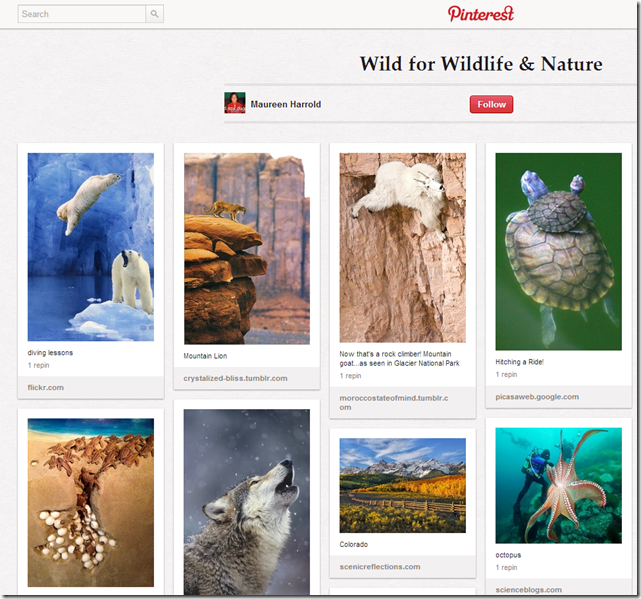
There is a little drama going on in the world of Facebook. One very popular Facebook page, Wild for Wildlife & Nature, has disappeared. I does still show up in cache’d search. I vaguely remember reading something last week about the owners feeling persecuted but I didn’t really think about it much.
So when some pinged me about it and pointed to the Wild for Wildlife & Nature site on Pinterest, I thought I’d share. Enjoy.
“Talking about music is like dancing about architecture.” ~ Thelonious Monk
Here is one of the videos we made of the Microsoft Jumpin’ Jive Orchestra last year. Enjoy.
“No pessimist ever discovered the secret of the stars, or sailed to an uncharted land, or opened a new doorway for the human spirit.” ~ Helen Keller
The Architizer starts this very interesting conversation:
“Cities have got a lot of things going for them, but starry skies are not one of them. All those lights and the pollution they bring with them tarnish the star-studded nights the less populous parts of the world enjoys. Photographer Thierry Cohen solves the problem, sorta, in his “Darkened Cities” photo series. His solution—to rid cityscapes of their electric lights and reintroduce the celestial vistas hidden away under the thick veil of pollutants–is a bit excessive, but the results are dazzling.”

A friend at work notes: I grew up in New Mexico, in a neighborhood which had very little light pollution at the time (sadly, it’s succumbed to urban sprawl as well). The night skies were crystal clear and I could see an amazing expanse of stars. But the Milky Way was not visible like in any photo.
You had to use long exposures and high-ISO film to get that (and to avoid getting a big streaky blur you also needed a barn door tracker or similar, but this was back when you were limited by physical film ISO and couldn’t just crank the sensor up to ISO 12800 or whatever).
Still, looking at these pictures I can’t help but think: No wonder our ancestors attributed divinity and supernatural powers to the stars. These pictures are amazing.
“People don’t dance to brilliant guitar solos or heady changes, they dance to the hook lyrics of a simple chorus.”
This was posted in Miami craigslist by a club owner about the bands he encounters, and also the realities of business.
 A bar, that is, an establishment that earns its revenue primarily from selling alcoholic beverages, measures its success by the ounce and the accounting is done everyday because we mostly live on the edge. So we spend our time trying to figure out how to sell more ounces. It’s not just how many people are in the house or how great the atmosphere is (that’s certainly important), but how many drinks, preferably premium, we sell in a day. That’s it.
Live music is important to most of us (if we have that kind of venue). But it is a significant expense and is only worthwhile if it produces more than it consumes, just like advertising and anything else we spend money on in order to sell more ounces. But so many of the bands that come through here have no clue what their job is. Your job is to sell booze. You’re not here for any other reason.
 There are some truly awful bands that actually chase customers away. But there are also some bands I would call mediocre who do a fantastic job of selling my product. There are also some really good bands who rock the house but not the cash drawer. While I appreciate good music and would never have an interest listening to that mediocre band’s lame CD, they’re coming back next week. Here’s why:
1. They play simple music people recognize. People don’t dance to brilliant guitar solos or heady changes, they dance to the hook lyrics of a simple chorus. (If you’ve ever wondered why pop is popular, that’s why). When the ladies want to dance, the guys show up and everybody drinks. Simple truth.
2. They don’t ask me for drinks, they ask my customers. This is a subtle art and if it’s done well, the band can more than pay for itself. Here’s a few obvious techniques: If someone offers to buy the band a round, you order shots of top-shelf. Even if you don’t drink it, ask for it anyway. If someone asks for a request, try to make a deal with them.
If you buy (your date, your table, the band) a round, we’ll play your song. Some bands beg for tips, and that’s fine, but it’s not what I’m paying you for. (Try to play request anyway. At least you wont chase them off.) We had one front man hold up a mixed drink and make a wonderfully cheesy but impassioned pitch that you simply had to try this because it was, as he put it, “a glass of pure happiness”. It resulted in over a hundred bucks in the drawer in just a few minutes. Those guys are busy.
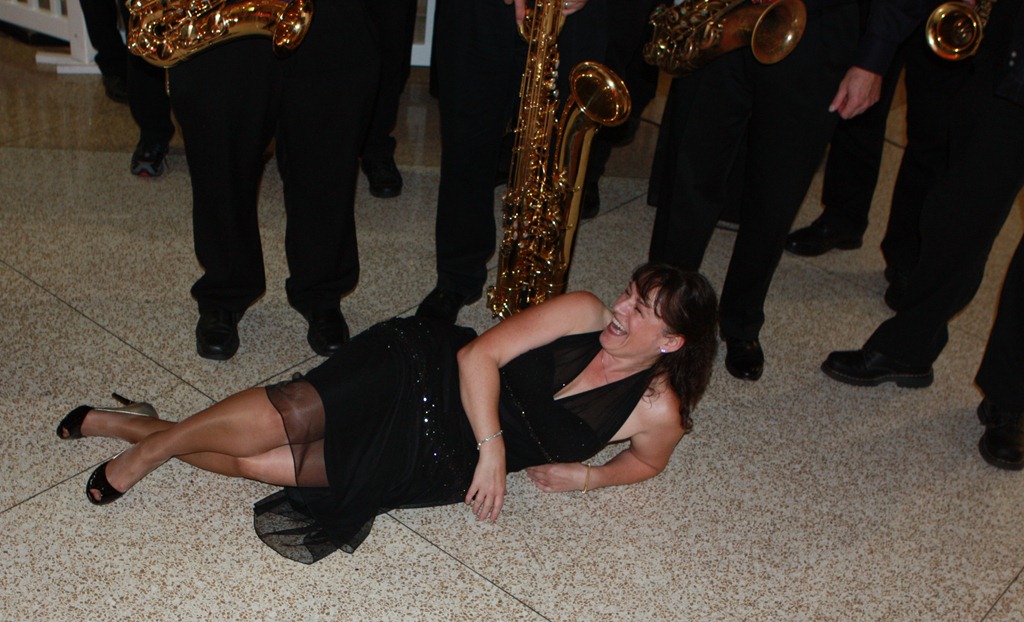 3. They may not be the best band in town but they look and act professional. I cringe when I see a supposedly professional band wearing frayed khaki shorts, flip flops, mildly offensive t-shirts and greasy baseball caps (the standard bro uniform). I don’t care if you’re bald, a baseball cap is unacceptable. Live music is a visual form of entertainment. If you dress well, even if it’s hipster, funky, weird or flamboyant, as long as you look like you care about your appearance, and show a little self respect, you’ll go over better with my customers.
The good bands also respect their gig and the customers. They show up on time, they don’t make a racket while they setup (hint: keep your drummer quiet especially when the jukebox is on.), they choose their set list carefully, they pace their sets well and stay engaged with the audience (don’t stop playing if the dance floor is full), they don’t get hammered and and they don’t leave a mess. All this adds up to what we call retention. Customers don’t leave.
You would be surprised how many customers leave because of the band. And it’s usually not because the band is awful, but because it’s too loud, it’s the wrong repertoire, it’s rude and dismissive, it’s not engaged and basically no fun for anyone else but themselves. And here’s a little tip: Your continued employment is directly dependent on my bartender’s opinion of you. That’s probably true for every single bar you play.
One last thing. It’s hard to find work. You might be surprised at how much competition you have. I get emails, voicemails, regular mail, fed-ex packages left for me, all with earnestly concocted press kits and demos and I ignore almost all of it. I get walk-ins who, if I’m there, I’ll give a few minutes to.
You’ve got maybe 60 seconds to make your “elevator pitch” and just a few more minutes to make it stick.
Again, you’d be surprised how many show up in their bro-clothes, tell me how awesome they are, and hand me a business card with a URL to their reverb nation page or YouTube channel. They probably go home and wonder why they don’t get a call, but I’m not going to visit your website or listen to your demo. You’ve got maybe 60 seconds to make your “elevator pitch” and just a few more minutes to make it stick. There is a sales technique I’m seeing that’s impressive, stands out and really works, but out of respect for the bands that figured it out, call it a trade secret.
Bottom line: A bar is a business. My bar is my business, my life, my success or failure. What I do in my business is entirely up to me because the risk is entirely mine. If I have a jam night, an open mic, solos, duos, bands, karaoke, or just a jukebox, that’s up to me and no one else. Whatever helps make the most revenue. I have great respect for working musicians and would rather not hire them at all than to short-change them.
“New Year’s Day now is the accepted time to make your regular annual good resolutions. Next week you can begin paving hell with them as usual.” ~ Mark Twain
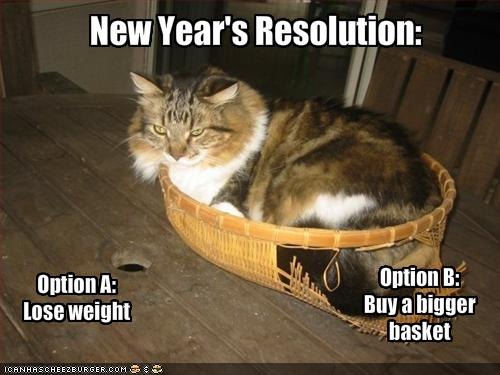 With all the talk and jokes about New Year resolutions going around I thought I’d take a look at what my resolutions would look like this year if I modeled them after my work-based annual commitments. As such they would need to be SMART goals:
Specific: Goal objectives should address the five Ws… who, what, when, where, and why. Make sure the goal specifies what needs to be done with a timeframe for completion. Use action verbs… create, design, develop, implement, produce, etc. Example: resolve accounting discrepancies within 48 hours.
Measurable: Goal objectives should include numeric or descriptive measures that define quantity, quality, cost, etc. How will you and your staff member know when the goal has been successfully met? Focus on elements such as observable actions, quantity, quality, cycle time, efficiency, and/or flexibility to measure outcomes, not activities. Example: secure pledges from ten new donors by the end of each week.
Achievable: Goal objectives should be within the staff member’s control and influence; a goal may be a “stretch” but still feasible. Is the goal achievable with the available resources? Is the goal achievable within the timeframe originally outlined? Consider authority or control, influence, resources, and work environment support to meet the goal. Example: obtain the XYZ professional certification within two years.
Relevant: Goals should be instrumental to the mission of the department (and ultimately, the institution). Why is the goal important? How will the goal help the department achieve its objectives? Develop goals that relate to the staff member’s key accountabilities or link with departmental goals that align with the institutional agenda. Example: develop and implement a diversity recruitment plan that increases the number of diversity candidates by ten percent.
 Um yes, well… here is my attempt:
Do more than my share: Go above and beyond what is expected of me. Find new ways to do things that will improve the business/home and make life easier for those I care about. This goal will be considered to have been met if even one person notices and exceeded if more than one person notices. Possible mentors include Tim Toyshima, Julie Werth, and Ray Guyll.
Bring home the bacon: Don’t be satisfied with my station in life. Strive to become valued and respected by most people I deal with. Innovate, work hard, and impress so that my team/s can’t imagine me leaving. This goal will be considered to have been met if I can retire at 65 and exceeded if I can retire by the end of this year. Possible mentors include John Gess, Deb Morseth, and Bill Sheehan.
Think before I speak: Gawd, this is hard. I have so many friends that do this well, that I don’t have to look far for examples. I’ve always tried to speak as if the person I’m talking about is standing behind me. But now I need to limit what I say to those few things that really need to be said. I need to become a world-class listener. This goal will be considered to have been met if I get a raise this year and exceeded if I get a level increase at work. Possible mentors include Jim Glass, Sr., Molly Pond, and Mark Hirayama.
Improve on those things I love to do: Life is about doing the things you love well. Narrow my attempts to improve to areas that have meaning to me. Read, study, practice, and strive to meet higher goals of performance. Separate the chaff from the wheat, and then double or triple the time spend preparing for performances, showings, and commitments. Accept constructive criticism and become a little less thin-skinned. This goal will be considered to have met if a teacher, mentor, or co-worker comments upon the improvement and exceeded if I get a standing ovation. ;0) Possible mentors include Charlie Wickham, Tina Touburen, and Merlin Williams.
See, this is hard to do and I didn’t me the specificity required in all cases. Maybe that’s because the four areas of improvement I chose cross boundaries for work, home, and other activities. Given time and effort, I could list my specific tasks (from my TO-DO list) such as recruiting, creating, practicing, and performing in a sax quintet (vice quartet that we have now) this year. That would be a first for me. But I suspect that the task-level goals are a lot more boring for my casual readers.
What are your top three goals for 2013? Be well.

Quinn the Eskimo Vintage Horns


 The Bis Key Chronicles