NPR: Hello Plate, Goodbye Pyramid

Now this is a pretty safe bet to be more popular with people who care about what they eat. I’m still looking for where chocolate goes. 

imageIt’s a pretty safe bet that not many people will mourn the demise of the U.S. Department of Agriculture’s food pyramid — the 20-year-old symbol of the department’s dietary guidelines — when it’s officially retired Thursday.

Just about everyone agrees the pyramid was complicated, and tried to get too many messages across at once — more dairy, less sweets, exercise, portion control, etc.

But the new symbol is simple — a plate divided into portions. And that’s a good thing, said first lady Michelle Obama at a news conference on the subject.

Read more…

Posted in Eating, Education, Everyday Science, Health and wellness | Tagged , , | Leave a comment

The Wit and Humor of Paul Desmond

“I would also like to thank my father who discouraged me from playing the violin at an early age.” ~ Paul Desmond

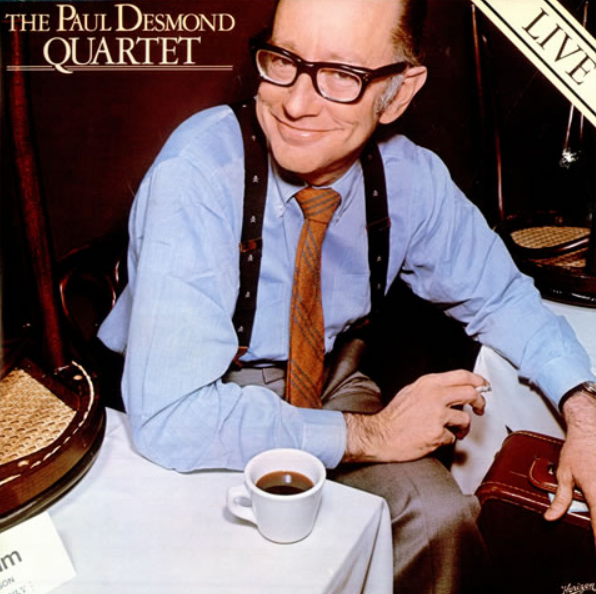
imagePaul was such a humorous fellow in addition to being one of my fav musicians. I luv’d this biography, “Take Five: The Public and Private Lives of Paul Desmond” by Doug Ramsey.

‘”As a jazz fan all of my (long) adult life, I thought I was quite conversant with the lives of the jazz greats. Not so with Paul Desmond. This bio, the size of a coffee table book, superbly traces his life as a student of all musical genres, of his intense desire to achieve perfection in his own playing and in his compositions. It covers his early doubts regarding a career in writing rather than music; his periods of self doubt and introspection. A major revelation to me was that success might not have come to him or to Dave Brubeck if they had not discovered each other. They read each others musical minds on the fly making for some of the most delightful jazz ever.‘’ ~ Lyle Spalding

Paul had a unique almost dry sense of humor. Here is a collection of some his quotes:

image“I have won several prizes as the world’s slowest alto player, as well as a special award in 1961 for quietness.”

“I was unfashionable before anyone knew who I was.”

“I tried practicing for a few weeks and ended up playing too fast.”

“I think I had it in the back of my mind that I wanted to sound like a dry martini.”

On the secret of his tone: “I honestly don’t know! It has something to do with the fact that I play illegally.”

image“Our basic audience begins with creaking elderly types of twenty-three and above.”

When asked by Gene Lees what accounted for the melancholy in his playing he replied, “Wellllll, the fact that I’m not playing better.”

“I discovered early in life that if you take gym first period, you can go into the wrestling room and sit in the corner and sleep.”
He was an English major in college. His reason for not pursuing a literary career, “I could only write at the beach, and I kept getting sand in my typewriter.”

“Writing is like jazz. It can be learned, but it can’t be taught.”

Of Vogue fashion models, he said, “Sometimes they go around with guys who are scuffling — for a while. But usually they end up marrying some cat with a factory. This is the way the world ends, not with a whim but a banker.”

“Sometimes I get the feeling that there are orgies going on all over new York City, and somebody says, `Let’s call Desmond,’ and somebody else says, ‘Why bother? He’s probably home reading the Encyclopedia Britannica.'”

His response to the annoying banality of an interviewer, “You’re beginning to sound like a cross between David Frost and David Susskind, and that is a cross I cannot bear.”

Shortly before the Dave Brubeck Quartet disbanded, “We’re working as if it were going out of style — which of course it is.”

Of yogurt he said, “I don’t like it, but Dave is always trying things like that. He’s a nutritional masochist. He’ll eat anything as long as he figures it’s good for him.”

Of contact lenses: “Not for me. If I want to tune everybody out, I just take off my glasses and enjoy the haze”

On Ornette Coleman’s playing, “It’s like living in a house where everything’s painted red.”

Doug Ramsey wrote that Desmond on seeing Barbara Jones’ oil painting of four cats stalking a mouse said, “Ah, the perfect album cover for when I record with the Modern Jazz Quartet.” Ramsey pointed out that the mouse was mechanical and Desmond responded, “In that case, Cannonball will have to make the record.”

Desmond’s fondness for scotch was well known. So in early 1976 when a physical examination showed lung cancer, he was ironically pleased that his liver was fine. “Pristine, perfect. One of the great livers of our time. Awash in Dewars and full of health.”

Excerpts from the cover notes to “Take Ten”:

“I’m taking his [jazz writer, George Avakian] place this time because he’s up to his jaded ears in Newport tapes and partly because this way we’ll have room on the back for pictures.”

“Briefly, then, I’m this saxophone player from the Dave Brubeck Quartet, with which I’ve been associated with since shortly after the Crimean War. You can tell which one is me because when I’m not playing, which is surprisingly often, I’m leaning against the piano… [a little later, speaking of guitarist, Jim Hall] … hilariously easy to work with except except he complains once in a while when I lean on the guitar.”

“Gene Cherico, who’s becoming a thoroughly fantastic bass player, has only been playing bass for the last eight years. (Before that he was a drummer, but a tree fell on him. No kidding, that’s the kind of life he leads)… Connie Kay is, of course, the superb drummer from the Modern Jazz Quartet, and if a tree ever falls on him I may just shoot myself.”

“Bob Prince, doubtless overwhelmed at having a song named after him, appeared frequently with advice and council which was totally disregarded.”

Comment by Doug Ramsey on Paul Desmond: “We were in an elevator in the Portland Hilton, waiting for the doors to close when the car jerked and dropped slightly, and a bell sounded. “What was that?” a startled woman asked. “E-flat,” Paul Desmond and I said simultaneously.”

Paul Desmond on why he changed his name said, “Breitenfeld sounded too Irish.”

Posted in Heroes, Hobbies, Humor, Jazz, Music, Saxophone, Vintage | Tagged , , , | Leave a comment

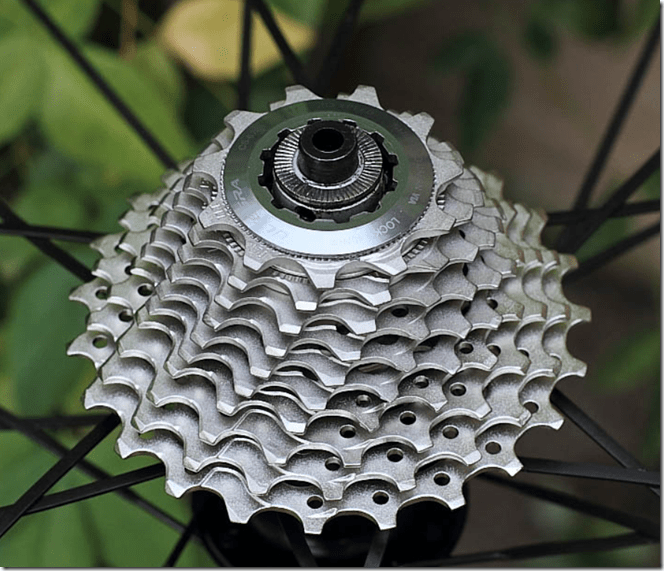
Oh so sexy; Shimano Ultegra 6700 11-23 goodness

From the Two Spoke forum we see this lovely tribute to bicycle technology:

image

Posted in Art, Bicycles, Forum, Hobbies, Man stuff, Photograph | Tagged , , , , | Leave a comment

A Late Bloomer’s Trip in Sax Toyland

Taken from the Sax on the Web article I posted in 2004 ish. I wanted to have a copy on my blog.

imageI’ve been toying with flying down to visit Kessler & Son’sshop after a great purchase of an Antigua Winds 590BC soprano sax last year. So I wrote Dave and asked him if I could try out some dream saxophones and he said, sure come on down. Since it was my wife and my 30th wedding anniversary, I decided to visit Las Vegas and swing by this saxophone Mecca called Kessler & Sons Music.

I was a Saturday morning as I approached the shop. The temperature was over 110 degrees but the shop was hopping with a lot of customers. As I walked in the door a clerk immediately approached and then scurried off to find Dave. I met Dave and his father Chuck and got a tour of the work benches and staff.

image
Chuck Kessler, Steve Dawson, and Dave Kessler

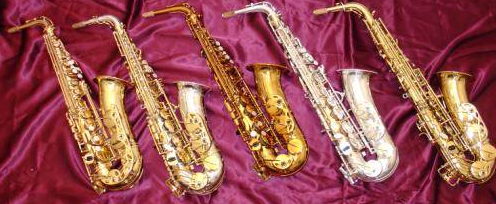
Then we got to business. Dave laid out some really sweet axes, a Selmer Ref 54, a B&S Medusa, a Yanagisawa A9937, a Yanagisawa A991, and a Yamaha 62 (they don’t make these anymore but Dave had one).

image

I pulled out my equipment. I brought my favorite mouthpiece an Otto Link Tone Edge #5 and a metal Selmer Jazz #6. I had my reed case, my favorite neck strap, a Korg tuner, and my camera. I started to play. I checked the tuning first. I had always had issues with the Selmer saxophones (it’s probably more about an intermediate like me than the horn) but with the Selmer Ref 54 I found the first Selmer I could grow to love. Next I did complete chromatic scale, overtones, and then some Charlie Parker from the Omnibook. I got to tell you, I was in hog heaven. 45 minutes later, I selected the Yamaha 62 as the horn I would buy.

It wasn’t about the fit or finish, if money had been no object I would have probably taken the Selmer or the high-end Yanagisawa. But I just didn’t think I sounded $2000 or more better on the top of the line horns than I did on the Yamaha 62.

That’s when Dave brought in the Kessler Custom alto saxophone. I hooked it up and started checking the intonation. I was not as impressed as I had been with some of the other saxophones, but then I am just an intermediate player. And my buddy who purchased a Kessler Custom baritone saxophone had no intonation problems at all. But the sax had a good sound, one that I could use next week in the jazz ensemble. Then Dave put an acoustical adapter (Kessler Tone Booster) into the cork end of the neck. For about an inch it reduces the taper so that your air pressure is more centered. All of a sudden, any intonation problems I thought I had were gone. And the sound was as good as any horn I had tried today.

I purchased the Kessler Custom for my backup horn and my wife’s primary alto saxophone for $700. That makes four horns that I or my buddies have purchased from Dave in the last two years. My friends and I are talking up these horns to other late bloomers who are starting out again. Let’s get to know a little more about Kessler & Sons Music.

image1. How and when did Kessler & Sons Music get started?

We opened in July of 1989. My father had been working for the main music store, Mahonney’s Professional Music and Drum Shop, for about the previous 10 years as their main woodwind repair technician. Originally, my father had approached the owner of the store about essentially taking over just the flute side of the business. Basically, opening his own little flute shop inside their shop. Primarily at the time, this store was a Yamaha store. My father wanted to bring in other brands and proposed the store sell him Yamaha stuff at like 10% over cost. They “graciously” declined this offer and combined with other reasons/factors, he decided to open his own shop.

With a small loan from his mother, he opened up our small shop with the main idea of doing repairs, a little retail sales, and some instrument rentals. He dealt only with band instruments, nothing else.

It was definitely an upward battle since when he opened, he had to compete against two very established stores (had been in Vegas for about 20 years each) and he did not have a huge major name like Yamaha in his shop.

He approached this task by making every instrument he sold automatically 30% off of retail, which at the time, was unheard of here in Las Vegas.

2. Who is the most famous musician or band that you have worked with?

That’s tough. We have worked with quite a few. Some of the more regulars are Sam Butera, Paul Taylor, Chicago (the band) and have worked on horns for Tower of Power, Everette Harp, Eddie “Lock Jaw” Davis, Charles MacPherson, Dona Menza. There are more that I’m sure I’m leaving out, but there are a few.

We recently started seeing Brandon Fields in our shop. Monster player. We haven’t done any work on his horns yet, he was in getting a few Kessler Custom NY Short Shank mouthpieces.

I think my favorite days are the ones when we get true professional players in my shop. Its nice to be able to sit and chat with these guys and also, getting a free concert isn’t too bad either!

3. Community bands, semi-professional bands, and SOTW are seeing a boom in the number of baby boomers coming back to music and playing the sax. What kind of questions do you ask a returning player when they are picking a new instrument?

Primarily, what the price range they want to stay in. Many adult players will stick with it because they are the ones investing in it… not a child who will change their mind frequently. Many adult players also say that if they are going to do this, why go with something basic, why not get something they enjoy because, hey, it’s their money. So I don’t want to pull out something that will offend them because it is student but I also do not want to pull out something that is 2 times their intended price.

Also add the fact that these days, people can get a great performing horn for low money (like with my Solist or Kessler Custom line), and no matter what their price range, they can get exceptional performance in their budget.

However, I let them guide me as to what they had in mind prior to coming in or calling. 90% have already done some research and have based an opinion off of that. So I let them tell me where they stand and I will either support the information they have already learned or if I find it flawed (I hate when customers come in and only want to try Yamaha… ugh), then I will do my best to help educate them from my standpoint but then let them make the choice.

4. There are also a number of adults starting to play the sax for the first time. When they come to your shop what do you recommend to them (buy, rent first)?

Most of the time, I recommend they rent for 1-3 months to make sure that they want to do it. I recommend purchasing sooner then later because it will save them money in the long run.

5. What interesting trends have you seen in the saxophone manufacturing industry in the last five years?

The driving trend in the last few years is the advent of inexpensive horn with huge quality improvements. China, Taiwan and all of Asia are making huge strides. China is the scariest. Here is a country that can put out product so ridiculously cheap, but combine that with improved quality and the whole economic dynamics of instruments change instantly. I do not foresee them making beyond student and intermediate levels because I think that as a political/capital system, they lack the patience and desire to truly make something to an artisans standpoint like Selmer Paris or Yanagisawa… but American made student instruments will face an even tougher time in the next 3-5 years with the rate of improvement.

6. What changes do you hope to see in saxophone design in the near future?

I do not see any huge design innovation to be honest. I think the innovation that we will see is the price/quality ratio will become better.

7. What is currently the best selling sax in your shop? How has that changed in the last few years?

Well it had been the Antigua Sopranos. Now, it is my Kessler Custom line. Both of these are because of the topics already mentioned of price for performance. Soprano is a boutique business. But the market desperately needs a great playing low cost offering. That is what the Antigua gave. It has opened up the soprano market by offering quality for a good price. My Kessler Custom line has done the same thing. There have been some recent forum posts comparing my horns to Yamaha Custom Z and Yanagisawa saxes. But my horn is 1/4 the cost. Sax players love this.

Prior to that, I would say that the Yanagisawa line was my best seller and again, I believe for the same reasons, just not as drastic. With the price/performance ratio that someone can get out of the basic Yanagisawa 901 series is absolutely unmatched in the other offerings from the “Big 4″… including the rest of the Yanagisawa line. Plus, the 901 series is for the most part, priced like an intermediate sax but the horn is by no means intermediate.

Price for Performance is what drives the sax market today, not name.

8. You often help beginners and intermediate players pick a mouthpiece. When I bought my Antiqua Winds 590BC last year you selected a Morgan Protone and it is the best soprano sax mouthpiece I have tried to date. What do you consider when making this recommendation?

Once again, it’s a case of price for performance. While I personally am not what I would publicly call a “sax player” (although many assume I am because of my knowledge), I have several sax players on staff. First, there’s my father. Then there’s our mouthpiece technician and repairman, Steve Dawson, who is an outstanding saxophonist. His night gig is playing baritone sax for Wayne Newton.

One thing that we pride ourselves in is looking for great performance at a low cost because when you find it, it is really easy to sell and let the product speak for itself. However, there is some resistance to that by some of the older mentality teachers who base everything on what they “know” from their own experience. Since they play on a Meyer 5M alto mouthpiece, they recommend that ALL of their students play on a Meyer 5M alto mouthpiece. What these teachers and their students do not realize is that the teacher has a New York Meyer 5M which is NOTHING like a current Meyer 5M. But the teacher “knows” best… I guess.

Morgan makes some fantastic mouthpieces. He knows like I do that Price for Performance is what drives sales. His mouthpieces, all of them, offer some of the best of that ratio. Hand faced student mouthpieces will absolutely outplay a pressed out of the mold mouthpiece. It does not take much effort to make a good playing inexpensive mouthpiece, but you have to want to spend that little extra time and you have to have the right people doing it. Mass production has caused mouthpiece inadequacies.

So basically, we play them, we evaluate them and then we consider their price.

9. Two of my buddies and I have bought saxes from you and we love them. One of them bought your new Kessler baritone sax. Do you get many returns from people who buy new saxes from you? And if not, what do you attribute this to (your inspection process)?

I would say we have a very low return rate due to a few things, one knowledge and experience. When we assist in the decision as to which sax to purchase, we are giving the customer professional opinions, not just reading some stats on a computer screen from a call center based in middle America… you talk to someone who knows what they are talking about and personally has a vested interest in making sure that you are happy. You talk to someone whose name is “on the door” or in the case of the net, whose name is on every page of the site.

We make sure that you are getting a product that in our opinion will be exactly what you are looking for because we know what we are looking for when we are evaluating products.

Also, there’s our setup. We do not ship anything without first going over it. The customer is happier with the instrument because right out of the box, it plays. They are less likely to return the instrument because combined with our recommendation process, the customer has a horn that is what they we need and that plays right away.

Of course we have our share of returns but 99.9% of the time, the customers are very satisfied with our service and I would say that 85% of them still end up making their final purchase with us (the other 15% may be to a used instrument that they found or maybe they were trying mine out next to something that they got somewhere else on evaluation).

We strive for satisfaction. We want everyone to be 100% satisfied with our service regardless of whether they keep the instrument we sent to them or not.
Posted in Band, Music, review, Saxophone | Tagged , , | Leave a comment

In Search of Saxophone Intonation

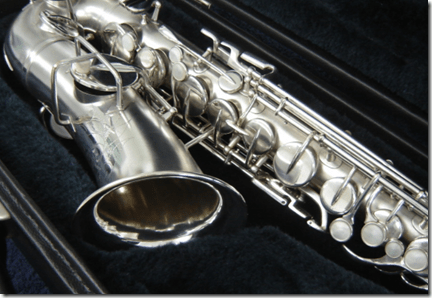
imageAlways in search of that perfect voice for my various saxophones and clarinets, this post in the Woodwind Forum “True Tone Alto” from John Talbot really spoke to me. The photo to the right is from John too.

Flexibility of pitch is best explained by using an analogy with brass instruments. Trumpet players talk about how different instruments “slot” differently when played through the harmonics.

An instrument that slots well goes quickly and solidly to the desired harmonic when the player approaches the required airstream and lip buzz for that note. In other words, the resonant frequency of the tube length used cooperates with the vibrating source (player’s lips) and locks in to the strongest frequency determined by the “regime of oscillation” of the note and its strongest overtones.

Another way to say it is that when the player gets close to the frequency with the air and the buzz, the trumpet jumps to that note. Instead of saying the trumpet jumps to the note, the player says that it “slots”.

imageThe same thing happens on a saxophone when the player fingers a certain note. The natural resonant frequency of the length of tubing to the first open tone hole tells the reed at which frequency to vibrate. The energy or strength of the “regime of oscillation” is determined by how close to whole number multiples the harmonics are to the fundamental. If the harmonics are not tuned well, the regime of oscillation is weaker and the reeds vibration is not locked in to a given pitch. This gives the player a lot of leeway to more easily “lip” the note up or down to where he wants the pitch.

Most trumpet players like their instruments to “slot” but not to “slot” too well. They say that those instruments deprive them of “flexibility” in their playing.
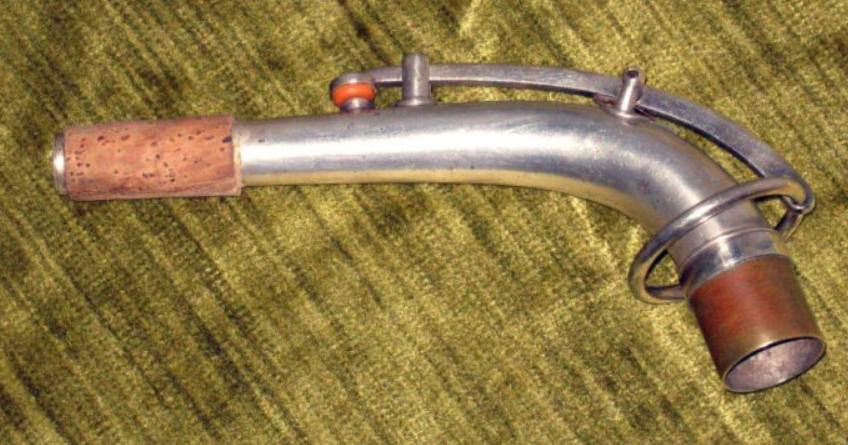
Saxes that don’t slot very well have the advantage of being very easy to do scoops and falls on and smear between the notes. The disadvantage is that the player has to always be setting and adjusting the embouchure to “dial in” the pitch—especially in the upper register. My experience with the True Tone is that it is too flexible—especially in the upper register. Hopefully a neck with a taper that better matches the horn will help align the harmonics a bit better and take away some of the “kazoo-like” tendencies of the sax.

__________________
Check out the saxophone repair “Tip of the Day” at: Altsaxrepair

Posted in antique, Forum, Repair, Saxophone, Vintage, Woodwind Forum | Tagged , , , , | Leave a comment

Neurowear. For the Hello Kitty in You!

From the Neurowear.net video: We created new human’s organs that use brain wave sensor. “Necomimi”is the new communication tool that augments human’s body and ability. “necomimi”will be released in the end of this year. Price, color and any other gadgets are undecided. When we announce about the product, we will tell you in website or facebook. Join the Neurowear fan page on facebook and get information or vote for questions!

Oh those Japanese. :O)
Posted in Advertisement, Art, Cat Woman, Culture, Facebook, Health and wellness, In the news..., Video, YouTube | Tagged , | 1 Comment

Esquire’s Joke from a beautiful woman

imageEsquire’s online magazine has a weekly feature that has beautiful women telling a joke. They recently added a video of the joke telling session which lets you see more of the woman than that you would see in a staged picture that may have been airbrushed. Tip o’ the day: Women with a sense of humor is a big turn-on for men.

image

After robbing a bank, a blond, a brunette, and a redhead duck into an alley where they hide in potato sacks. The cops first go to the sack with the brunette in it and kick it. The brunette says, “Meow.” They go to the sack with the redhead and kick it. She says, “Woof, woof.” Last, they kick the sack with the blond, and she says, “Po-ta-to.”

Read and see more…

Posted in Humor, Internet, Wildlife | Tagged , , , , | 1 Comment

Jazz Drums Redux ~ A review of my kit

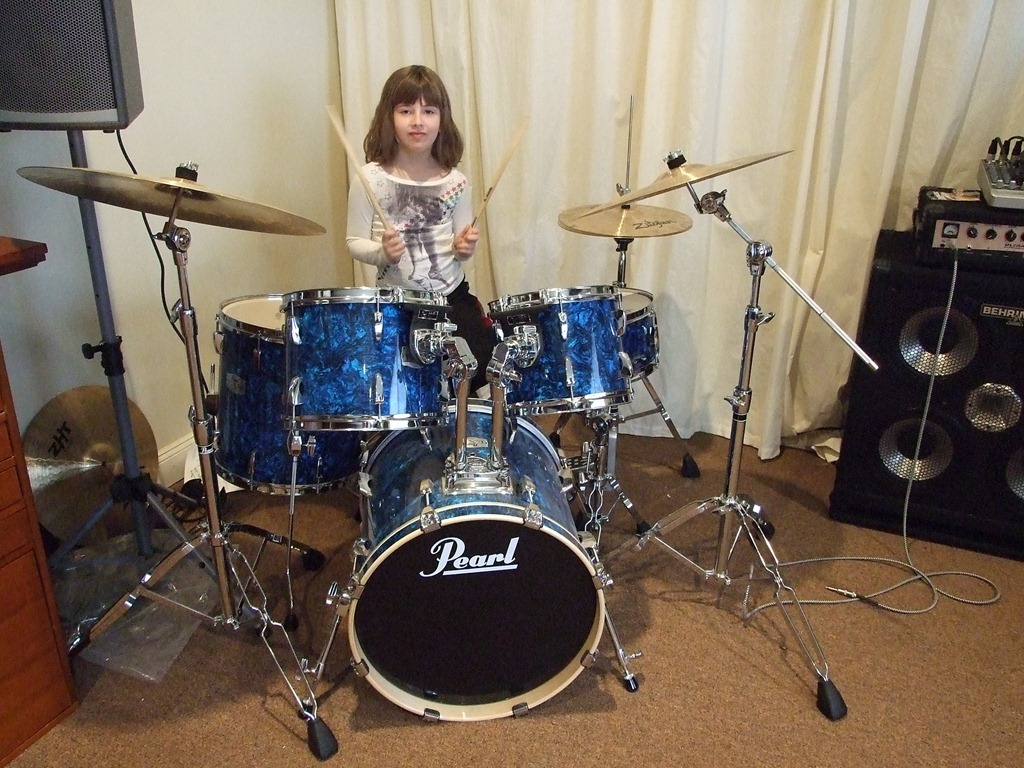
I invited Scott Small to sit in with the Microsoft Jazz Band for an upcoming gig. One of the practice sessions was in my music studio. I have a drum kit, bass and amp, and Roland keyboard sit up so that the very few great rhythm people out there can just show up and play. Here is his recent review of my drum kit.

DSCF0094Thanks again for the opportunity to use your drum kit. Somebody knew what they were doing setting up those drums! They’re probably a fan of Steve Gadd, judging by the choice of heads and tuning. The “student” level drums sound just as good as the more expensive ones when you put on good heads and tune them carefully.

Only thing I would change is the batter head on the snare drum—it has a raised reinforcement “dot” which is great for rock players, but bad for jazz because your brushes catch on it. A coated head with no reinforcement, or with reinforcement on the *bottom* side, would be better. A smooth head is no good for brushes, has to be coated or otherwise textured.
 
Cymbals, however, are a different story. “Student” cymbals sound pretty bad, and there’s nothing you can do about it. They are what they are. And good cymbals are very expensive. In fact, most serious drummers bring their own brass when using someone else’s kit.

In case you’re interested in upgrading, here’s my $0.02.
 
Jazz players (both drummers and other instrumentalists) love the sound of hand-made ride cymbals. Historically, all the good ones have come from Turkey, but recently some good ones have come from China at a much better price. Each one is unique, with it’s own personality; every famous jazz drummer has one or two prized rides that define “his” sound. Picking a “good” ride is (of course) somewhat subjective, and you need to try several before buying one.

image

Currently the best Turkish brands are Bosphorus and Istanbul; those are what I use. Zildjain also makes a Constantinople line much like the Turkish products. The Chinese company is Dream Cymbals and Gongs, and I’ve seen top jazz players using their stuff recently.

If I were in your position, and I had room on my credit card, here’s what I might do…

 image

Pay a visit to Donn Bennett with the best cymbal selection in this part of the world and arrange to take home pair of hi-hats, a crash, and maybe 4 rides, with the understanding that all but one of the rides would be returned. He should have no problem doing that.

Then, have a session at your house with a (good) drummer and some other players. Have him play each of the rides, alone and with the combo, and just walk around the house and listen to the sound of each one. Your ears will tell you which one has the magic—the sound at a distance is what matters, more than up close.

Which cymbals would I bring home?

  • Hi-hat: Bosphorus Hammer 14″ (Jeff Hamilton model) or Istanbul Om 15″ (Cindy Blackman model, also used by Jeff Ballard), maybe also Dream Bliss 14″
  • Rides: Bosphorus Hammer 20″, Istanbul Om 22″, Zildjain K Constantinople 20″ or 22″, Dream Bliss 20″ ride, maybe a Zildjain 20″ K Custom dark ride (machine made).
  • Crash: Bosphorus 18″ Antique Crash, thin or extra thin

Yeah, that would be one awesome party!

Posted in Band, Drums, Jazz, Man stuff, Music Instruments, My World | Tagged , , , , , , | Leave a comment

Work at Home Wednesdays?

imageA number of years ago I was talking to my boss about her “Work at Home Wednesdays”. She was the kind of person who interviewed new team members very thoroughly and then trusted them to do the right thing. (The picture to the right is from Work-at-Home-Find.com.)

When I was a manager, I didn’t care when my employee’s got to work or went home. I just gave them more work than they could do with a lot of stretch goals and then let them at it. I knew this would work because I was in the enviable position of having hired these folks. Long after I have moved on to new positions, they have grown to be stellar resources for my company.

Unfortunately, the umbrella team I worked for didn’t appreciate that. They rolled out “core work hours” that spanned 10 AM to 4 PM. That mostly hurt the writers on my team that had school-aged kids. They disallowed work at home days in the week too. When I probed my management rep, she said there were problems on some of my peer teams (not my team) where people were taking advantage of a rather lax management style. So my team had to toe the line so that management could say everyone was being treated the same. I attribute some moves away from my team to this heavy handed policy. Sigh…

Snyder attributes the success of Sonoma’s scheduling to its thorough interview screening process, saying, “once someone’s an employee we have the utmost confidence in them to behave responsibly and not abuse the system.”

So this article about Sonoma Partners, a company that I work with, did not surprise me. Wicked smart, the two principles hire smart, like I did, and trust their people. Maybe this won’t work at most jobs, but where you are hiring the best and the brightest to do mondo work, it only makes sense. Reducing turnover saves a company a lot of money. Happy employees improve the quality of life at any company.

Posted in Culture, Employment, Health and wellness, Work Related | Tagged | 1 Comment

Swing dance your way to health and happiness

With so many bands it’s about their ego. But we’re just servants to the dancers; we wouldn’t be anything without them.” ~ Heather Ellison, of the Savoy Swingers

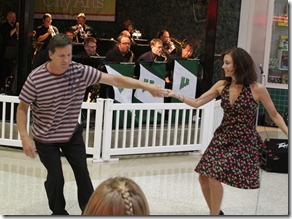
imageI was looking at some pictures of the dancers at one of our concerts this year and thought about this post. We luv our dancers so much. They are so into the music and so appreciative. They swirl, they jump, and they even sweat to the swing jazz from our band. Our fav dance teachers come from the Eastside Swing club. We know many of their favorites like:

  • Jump, Jive, and Wail
  • Zoot Suit Boogie
  • Sing, Sing, Sing

And the roar of the crowd when we finish one of these songs often brings “goose bump city” to me.

MJBdancers3 20090731184250

We should consider every day lost in which we do not Dance at least once.” Nietzsche

I won’t even pretend to go into the science and health associated with why bouncing to the music is healthy. I suspect part of the benefit is associated with the shear joy some people have when they are dancing. What I do know is that when the crowd is dancing and cheering, the band so gets into the music and the recordings show we often sound much better.

Posted in Band, Culture, Dancing, Jazz, Music, Style, Swing Dancers, teachers | Tagged , | Leave a comment