I was listening to Ken Robinson, author of “The Element” speak last week and I keep coming back to a little story he tells. It goes something like this.
A friend of mine was at a party and became enthralled by the performance of a jazz pianist. During a break he approached the pianist and said, “I would like so much to become a good pianist.” The pianist looked at the 50 year old friend of mine and said,
“No, no you don’t. If you wanted to become a musician you’d be one already. I practice over 5 hours a day and gig 6 nights a week. If you wanted to be a musician, you’d be one already. You don’t want to be a musician, you like the idea of being a musician.” Or words to that effect.
 I often give lessons to high school kids who aren’t quite making it in music, late bloomers who are coming back to music and my grandkids like Amber in the picture to the left. In one session I will cover all the tricks to becoming a good musician. Like practicing only the hard parts in a set list, long tones for the woodwind player, Aebersold for the would be jazzer, and so on. Many of the things I demonstrate are things I wish I’d known when I was performing in high school. After the first lesson and if it is obvious to me that the student is inclined to put in the time necessary to become a good musician, I’ll recommend lessons by some of my favorite local instructors.
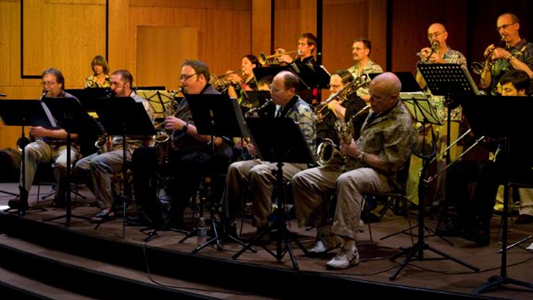
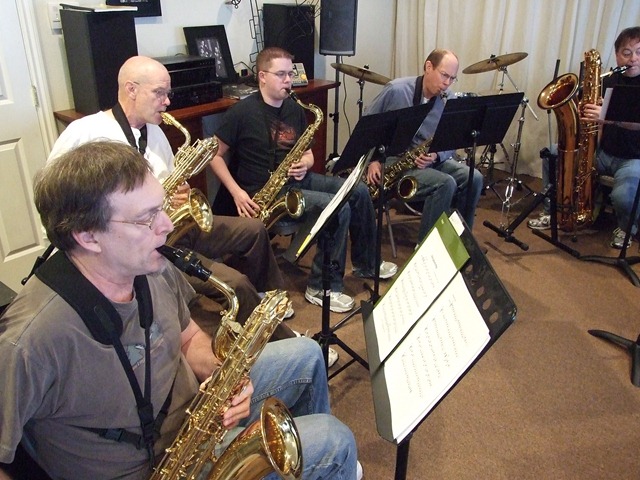
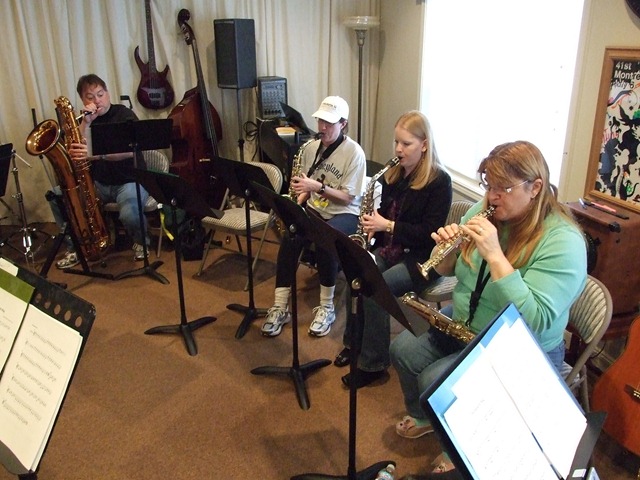
And I audition people for chairs in three to four groups like the Microsoft Jazz Band, the Pacific Cascade Big Band, the Professor Gadget Sax Quartet and the Woodinville Community Band sax section. The auditions usually go like this:
1. Get email from musician saying she/he want to get back into music. Nine out of ten times there is no indication of the skill level of the candidate.
2. Write response for any open chairs with these requirements; must own instrument/gear, know major scales, be able to read changes in solos, and for a trumpet hit high C. ~90% of the candidates never write back.
3. For those who are interested we audition them. If they are good they audition by subbing during a practice session.
4. If the candidate is even half as good as we would wish we offer them a chair or a position on the sub list.
 In community bands in major metropolises you can get away with this; there are a lot of wanna be’s. It also saves you a lot of time with candidates who would waste your time, often for years. Doing this over and over for the past 4 years has brought me to this conclusion. Most people won’t put the work in to become a musician unless they are really passionate about music performance.
For example, I take two lessons a week, practice ~5 hours a week, and play with a number of bands. All this with a day job and family commitments that take up a lot of my time. I’ll never be a professional musician. But I will put in the time to become a decent hobbyist and often be called upon to solo. Maybe in ten years I’ll get there. And I am enjoying the process of learning, practicing, and performing.
I’m passionate enough about music to be an admin in the Woodwind Forum, play sax and clarinet, teach what little I have to offer, and practice. When I hear, over and over, people say, “I want to be a musician.” I usually think to myself, “No, no you do not.” Sometimes, I’ll even tell them that to their face… in a nice way.
 Taken from the Sources of Insight blog of the same title: