Every once in a while I find a group picture that I like. This one was captured at Mike’s McMansion in 2002.
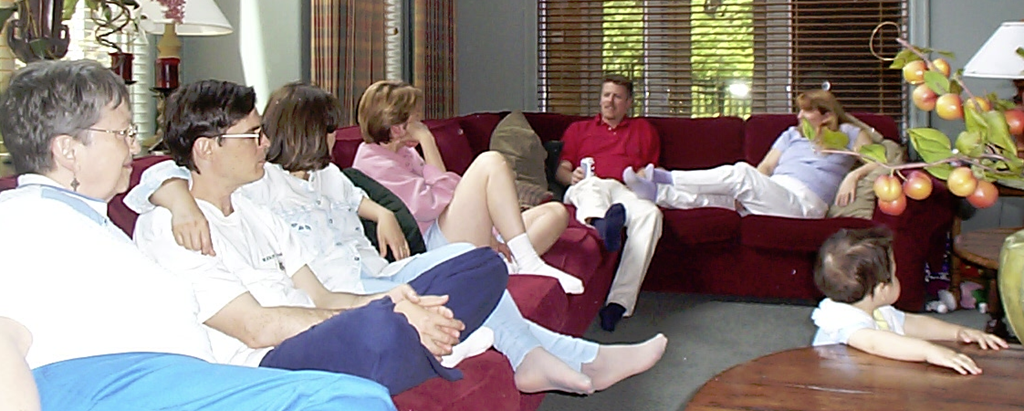
From Left to right, Mom, Pete, Racquel, Deb, me, Suzy, and one of Pete’s 20 kids.
Every once in a while I find a group picture that I like. This one was captured at Mike’s McMansion in 2002.
From Left to right, Mom, Pete, Racquel, Deb, me, Suzy, and one of Pete’s 20 kids.
Apologies to our man Clement Moore.
 ‘Twas the night before Xmas and all through the farm,
The pond was froze over and so was the barn.
The snow was piled up belly-deep to a mule.
And the kids were all home on vacation from school.
Happier young folks you never did see,
Just all sprawled around a-playin’ with their WII.
Then suddenly, some time around 8 o’clock,
There came a surprise that gave them a shock!
The power went off, the TV went dead!
When Grandpa came in from out in the shed
With an armload of wood, the house was all dark.
“Just what I expected,” they heard him remark.
“Them power line wires must be down from the snow.
Seems sorter like times on the ranch long ago.
“I’ll hunt up some candles,” said Mom. “With their light,
And the fireplace, I reckon we’ll make out all right.”
The teen-agers all seemed enveloped in gloom.
Then Grandpa came back from a trip to his room,
Uncased his old sax & started to play,
That old Christmas song about bells on a sleigh.
 Mom started to sing, and the first thing they knew
Both Pop and the kids were all singing it, too.
They sang Christmas carols, they sang “Holy Night,”
Their eyes all a-shine in the ruddy fire light.
They played some charades Mom recalled from her youth,
And Pop played a song from Aabersold’s Vol. 78 .
They stayed up till midnight-and, would you believe,
The youngsters agreed ’twas a fine Christmas Eve.
Grandpa rose early, some time before dawn;
And when the kids wakened, the power was on..
“The power company sure got the line repaired quick,”
Said Grandpa – and no one suspected his trick.
Last night, for the sake of some old-fashioned fun,
He had pulled the main switch – the old Son-of-a-Bitch!
~ adapted from an anonymous post on the Bass Sax Coop.
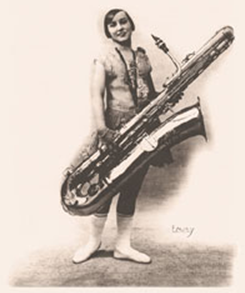 Deep Schrott bass sax quartet was founded in 2008, this is the first and only all-bass-saxophone-quartet ever. The German players and composers Dirk Raulf, Wollie Kaiser, Andreas Kaling and Jan Klare play their original compositions as well as own versions of rock and pop tunes.
These guys have been sharing excerpts and video clips on YouTube.com for years. The bass sax has become someone of an oddity in today’s music literature and the music performance scene. I can tell you carrying one around is not an easy proposition. I actually have to make sure the bass fits in a car before I buy it.
“The bass saxophone is the second largest existing member of the saxophone family (not counting the subcontrabass tubax). It is similar in design to a baritone saxophone, but it is larger, with a longer loop near the mouthpiece. Unlike the baritone, the bass saxophone is not commonly used. While some composers did write parts for the instrument through the early twentieth century (such as Percy Grainger in Lincolnshire Posy), the bass sax part in today’s wind bands is usually handled by the tuba, or in jazz and other popular-music bands by the double bass or electric bass, all of which have a lower range. In the 1920s, the bass saxophone was often used in early jazz recordings, since it was at that time much easier to record than the tuba or double bass.
The instrument was first used in 1844 by Hector Berlioz, in an arrangement of his Chant sacre, as well as in the opera Le Dernier Roi de Juda by Georges Kastner, also in 1844. Leonard Bernstein used a bass saxophone in his original score for West Side Story, as did Meredith Willson in his original score for Music Man and Sandy Wilson for “The Boy Friend”. The American composer Warren Benson has championed the use of the instrument in his music for concert band.” ~ Wikipedia
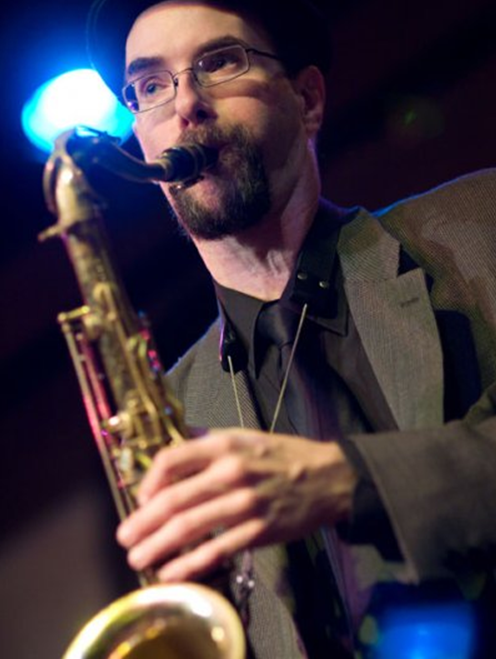 Greg Fishman has some wickedly hard and yet delightful Jazz Etude books out there. He also gives online Jazz Sax lessons, is a stellar musician in his own right, and admits to laughing as he responded to this potential saxophone student. I have copied two of my instructors and will be talking to them about some of this as I recognize myself in some of these tongue in cheek characterizations.
I love teaching, and I always look forward to helping new students. I sent an enthusiastic email, telling him that I feel that I can really help him learn to improve his saxophone playing and his ability to learn the jazz language and to im…provise.
He wrote back, stating that all of my words sounded good, but that he’s heard all these same claims from his other teachers in the past, as well. He asked why his lessons with me would be any different from those of his other teachers who tried and failed with him. I thought this was a fair and interesting question, and it prompted me to write this response below. It is a bit of a rant, but I bet that many readers will identify with a lot of it:
From: Greg Fishman
To: Fred (the sax student Fred, aka Mr. Everyman)
 Dear Fred,
As you’ve shared some skepticism with me about hearing all of these claims before, I can tell you, from my perspective, I’ve encountered many adult students in your situation over the past 25 years of teaching. Many times, adult students have been to dozens of teachers and music camps, and they own every book on the market. Yet, still they can’t play. I’m generalizing here, (just as you’ve generalized about all of your past teachers) but I’ve found that adult students often have many things in common:
1. They think there’s a single “answer,” as in “You just do THIS and then you can play great.” There is no single answer…. “I’ve always wanted to learn to speak Portuguese. Just tell me how, and I’ll start speaking fluent Portuguese right now.“
2. Misguided concepts. They cling to all of their well meaning, but horribly misguided concepts about playing from their past attempts at learning jazz. They refuse to let go of the way they’ve done things in the past, assuming that because they’ve played the same lick the same way for the past ten years, it must be right. They take this conceptual baggage to every new teacher they visit, failing each time and blaming the new teacher.
 3. Lack of trust. Many adults simply have been burned too many times in the past to trust what I’m telling them is true and will help them. They’re constantly disrupting the flow of the lessons, asking for me to justify my advice to them.
4. Ego. Their pride gets in the way of them really getting down to business with something challenging, and they can’t stand to hear themselves struggling with something new, so they keep practicing what they can already play, instead of learning something new and moving forward.
5. Patience. Adults are the most impatient people I’ve ever met. They want answers and results immediately, often sabotaging themselves with their impatience for the learning process. For example, I could read a book on how to play golf in an hour, go out to the course and be no better than I was before reading the book. It takes time and experience and patience! There’s definitely a lot of trial and error involved.
6. Fear. They’re afraid. Afraid of failing, of sounding bad, of being embarrassed, of playing wrong notes, etc. When you learn to ride a bicycle, you fall a few times at first, until you learn how to balance yourself. You don’t fall once and then walk away, defeated, never to ride again. You get back on the bicycle and keep trying until you can feel what it’s like to have balance and not fall down. If you’re only willing to ride a bicycle with a 100% guarantee you won’t fall down a few times, you’ll never learn to ride a bicycle.
7. Misplaced self-confidence. These folks are the complete opposite of those mentioned above. These students play so horribly on the changes that they’re routinely being thrown over the “harmonic handlebars” (of their imaginary bicycles), yet, they think they sounded like they just won the Tour-de-France.
These students are often playing E naturals as whole notes on C minor chords, and they think it’s just fine! I’m often amazed at the utterly unflappable confidence of some adult students. If I call them “out “ on missing the changes, they’ll argue with me like I’m an umpire who just made a bad call at home plate.
8. Enough theory knowledge to be dangerous. Knowing all the theory in the world won’t do you any good if you don’t hear the sounds in your head. Thinking intellectually about fingerings and key signatures and scales won’t help you produce a great solo any more than thinking vividly about vowels or the number of syllables in each word will help you form a meaningful sentence.
9. Lack of concentration. Many adults can’t focus their attention on the details needed to improve their playing. Often, it is necessary to break down the components to very small details in order to fix some problems, and some people lose concentration.
10. They don’t actually listen to jazz. They read books and articles about how to play it, they buy lots of gear, but they haven’t spent years listening to the greats, absorbing the sounds as styles of the top players. Parker, Miles, Bill Evans, Getz, Stitt, Coltrane, Lester Young, Cannonball, etc. You should be able to sing some of their solos right along with the recordings, or, even better, by memory. This is essential to learning the language. These students seem to like the idea of jazz more than jazz itself.
Fred, if my comments above haven’t scared you off, let’s get started with the lessons!
Sincerely,
Greg Fishman

From MSNBC’s Week in Pictures. “The moon rises above snow-covered trees near Igis, Canton of Grisons, Switzerland, on Dec. 16.”
Randy presents this stellar video to his friends on facebook and what a great find. For those of you who don’t know TED is they are a site that promotes “Ideas worth Spreading”. It is dedicated to presenting very educational shorts provided by some of the best teachers, musicians, artist, and scientists in the world.
Calefax is a reed quintet, based in Amsterdam. Few ensembles can claim to have created a new musical genre, but Calefax, a quintet composed exclusively of reed instruments, has brought a fresh sound to audiences. The Amsterdam-based group’s unusual combination of instruments — clarinet, oboe, saxophone, bassoon and bass clarinet — has resulted in unconventional adaptations of familiar works, and original compositions by an array of living composers.
One of my fav videos from the In the Mood show last week is this little gem, A Nightingale Sang in Berkley Square, arranged by Miller and sung by Robin Hilt.
My fav bass and guitar player and coworker at work, Brad Benefield is at it again. A number of years ago I was gifted his Christmas CD and it is one of my favs. I’ve seen and been in a number of bands with Brad on bass and guitar and he is a stellar musician. There is even times when Brad plays both bass and guitar using his Frankenstein guitar/bass critter.
This Christmas he offers up a collection of Christmas songs on various and unique guitars. So I thought I’d share his site for your entertainment.
Happy holidays Brad. See you for our next Microsoft Jazz Band gig in January. 
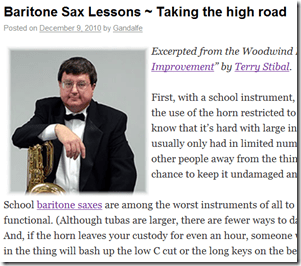
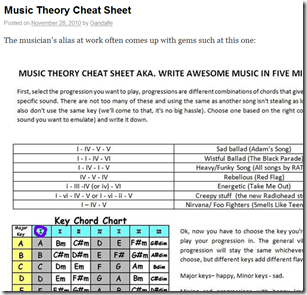
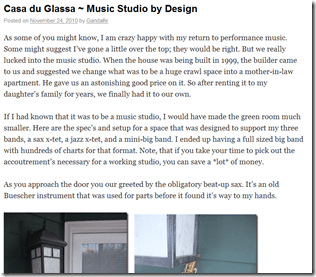
Okay, for those of you who have been paying attention, I have been naughty but mostly nice this year. So what follows is my compilation of my nicest and naughtiest posts on this blog for 2010. I think at my naughtiest I would be R rated and the nice are most certainly G rated. The best of each category are at the end of this post. Clicking on the thumbnail picture will take you to the original post.
I’m basing these on the page views for popularity plus comments that were made on the post or to me in email. Note that I lost a lot of stats in the move from Windows Spaces to WordPress.
Nice

Naughty
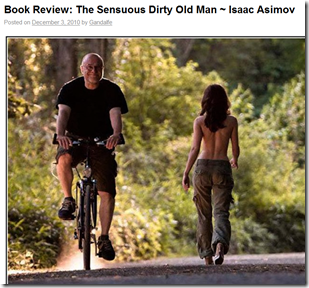
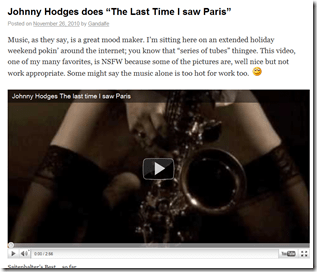


Number One nice post
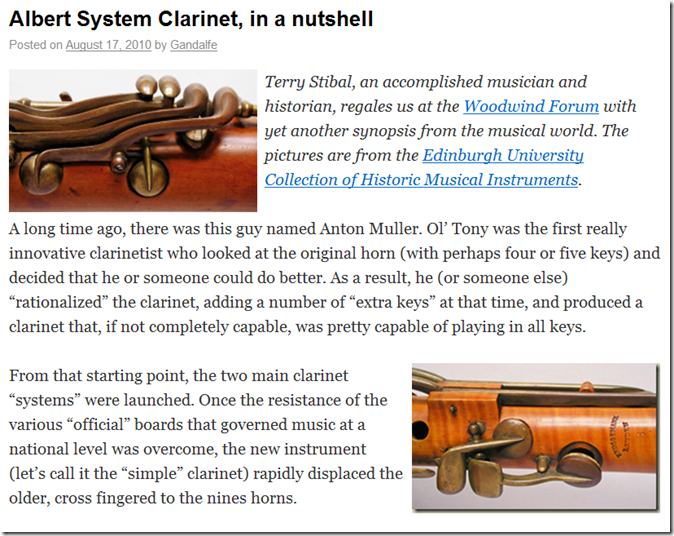
Number One naughty post

It’s been a fun year. Here’s hoping next year is even better as I learn the in’s and out’s of the WordPress authoring platform. Thanks to all my readers whoever you may be. Special thanks to Gordon and Terry for contributing some stellar posts. And kudos to those of you who took the time to leave a comment; that really spurs me on to writing more.
I’m Jones’ing for some Big Band and the In the Mood theater production is doing their last weekend of the show in Monroe, WA. I invited late to the gig after I already had two other gigs, so I will have done 4 of the 6 show. “In the Mood,” written and directed by Terry Simon, is a re-creation of a USO-style show as might have been presented to U.S. troops near the close of WWII. This year’s version is set in the Pacific, where the Sky Notes Orchestra, a seventeen-piece big band under the direction of Bruce Gallagher, along with seven singers, brings the sounds of Benny Goodman, Glenn Miller, Duke Ellington, and the Andrews Sisters. The show also features the vocal and comedic talents of Greg Norgaard, L. Sam Samano, Robin Hilt, Ellen Powell, Rick Wright, and Brianna Underhill.
Here are my notes to my friends Burch and Tina who covered the other two dates for me. Thanks youse guys!
1. Instruments: alto & bari sax, sop & bass clarinet
2. I’m beginning to see the light has bari and trumpet duet kinda thing there. Play out. There is a penciled in repeat for four more soloists.
3. Mele Kalikimaka has some nasty bass clarinet runs and the song is fast.
4. Hard hearted Hannah has two sixteen note run solo’s that sound really good when you hit them. Blow them as loud as you can and still maintain intonation.
5. Indian Love Call has some fricken fast swaps from alto to clarinet.
6. Nightingale has another fricken fast change from alto to bari. I play the alto in front of the bari on my lap to make that change.
7. One of two nemesis, Swingin’ on a Star has a bass clarinet run, only doubled by the bass that modulates a change in key for the whole band. It is hard to play loud enough. And I end up playing the bass clarinet in front with the bari on my lap to make the change.
8. Fun but puts you on the spot, When Jonny Comes Marching Home has the bari sax solo for the first eight measure. Please have played this before the first practice.
9. My other nemesis spot, I’ve sent you the music snapshot of the clarinet part on page two. The band plays this at around 200.
10. Winter Wonder land, another 8 measure bari solo at the first eight bars. Forte, staccato, with octave leaps.
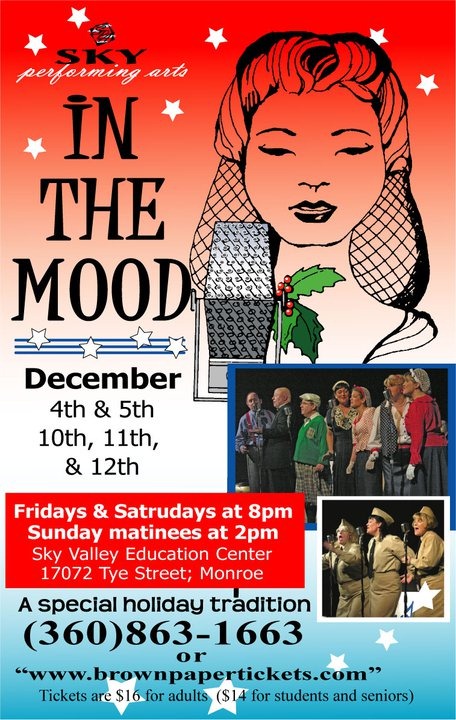
This show has been so fun both with the music that was selected and with the people in the show. The sax section is tight, the singers are fun, and rhythm section swings. Hope to see y’all there.

Quinn the Eskimo Vintage Horns


 The Bis Key Chronicles