For all your Revolutionary Ideas ~ If the founding fathers used MS Word

You can bet that TJ, GW and gang would have loved having Microsoft Word when crafting the Declaration of Independence. Luckily you have it to capture your revolutionary ideas! See what it would’ve been like if Word was around in 1776. 

Have a great weekend. Get out and hear some music.

Posted in Humor, Microsoft, Oddities, Politics, Video, YouTube | Tagged , , , | 2 Comments

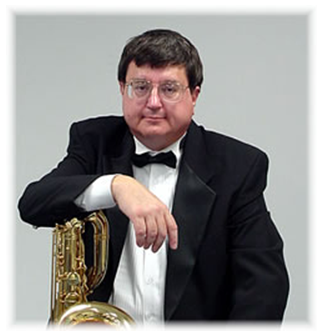
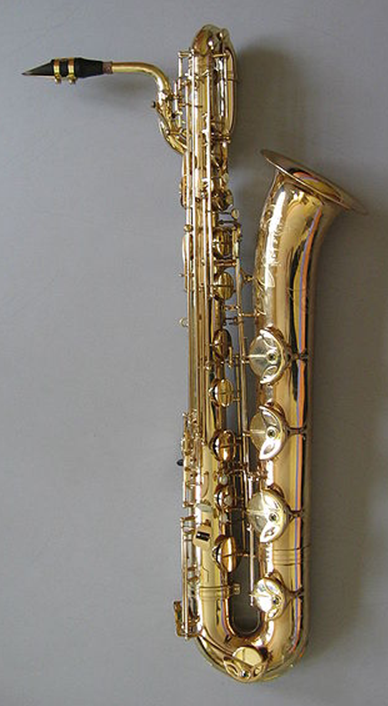
Baritone Sax Lessons ~ Taking the high road

imageExcerpted from the Woodwind Forum thread, “Bari Sax Improvement” by Terry Stibal.

First, with a school instrument, if it is at all possible, get the use of the horn restricted to you and you alone. I know that it’s hard with large instruments (which are usually only had in limited numbers), but if you can keep other people away from the thing, you have a decent chance to keep it undamaged and in regulation.

School baritone saxes are among the worst instruments of all to keep leak tight and functional. (Although tubas are larger, there are fewer ways to damage the mechanism.) And, if the horn leaves your custody for even an hour, someone without a vested interest in the thing will bash up the low C cut or the long keys on the bell. (Bass clarinets are even worse. One encounter with a chair edge can nudge a saucer pad on the lower joint, and there goes both your ability to play low notes and to play over the break. Bummer.) Mind you, you can play a baritone without functional lower keys, but the technique is somewhat “limiting”, if you know what I mean.

In the golden days of my youth, when I was foolish enough to take on private students (almost all on bass clarinet – I had a “reputation” throughout southern IL, and they came to me from far afield), I would first ensure that the student was serious about playing. If that was so, then next I would negotiate with the school for an exclusive instrument for the young lady (most of my students were of the feminine variety – weak girl clarinet players get assigned to bass clarinet all of the time). If that was not possible (and it was only possible in about half of the districts), I then strongly urged the parents to purchase a Vito or Bundy horn for their child.

imageOnce this was all in place, the players literally “bloomed” on the instrument. No more squeaking or squealing – little girl fingers which could not seal the lower chimneys on the soprano clarinet were suddenly transformed into powerhouses on the bass, where pads did all of the hard work. The horns “got out of the way”, and students were no longer frustrated with their horns. By the end of the first year, students who were positive about the playing experience were playing out of the intermediate or advanced clarinet (not bass clarinet) method books, ranging well above high C with perfect facility. I am convinced that this is the only way to go on a harmony instrument. It might cost some bux up front, but if the student is committed, it works like a charm.

Now, as to breathing. As a low instrument musician, you routinely have to move more air through the horn. Even today, some forty five years (sigh) after I first picked up a sax, I still routinely mark breath points through music. Many is the time when I become distracted and ignore these little guideposts (too many low cut cocktail dresses on the dance floor), I find myself at the end of a critical phrase or hold, where the bass of the group is carried only by me and the bass trombone, with “half the air’ that I need.

(Example: the Nelson Riddle arrangement of New York, New York, where the band comes to a screeching halt while the Chairman of the Board imitator gets loose and carefree with the “Theeeeese lit—-tle towwwwwwn blues” entry. I generally steal a huge, hockey bench breath one bar before the held note, simply so I am sure that the two of us (bass bone and I) can carry it through.) Leading into breathing here, I have always taught my students to use both the diaphragm and the “auxiliary muscles of respiration” to up their total “blow time”. It’s a trick I picked up from my juniors hockey coach, back before the dawn of time.

The diaphragm is the normal method that the human body learns to breathe. You “pull” the diaphragm (a large sheet of muscle – in a cow, it’s the flank steak yum!) downwards, which in turn expands the bottom of the “chest cavity”, causing a partial vacuum that draws air into your lungs. The auxiliary muscles are the ones that are carried around your ribs. (Think spare rib meat – double yum!.) They work in a slightly different fashion, by pulling the rib cage open to the sides. This too creates a partial vacuum within the chest cavity, resulting in more air being brought into the lungs.

While we reflexively breathe with the diaphragm, even when knocked unconscious, you have to work to get the auxiliary muscles into the mix. The way to do this is to visualize “pulling” the rib cage open with the muscles on the sides. You may have to do this with the diaphragm fully pulled down at the same time – some can only do it that way at first. Take the deepest breath that you can with your gut, and then – while holding that deep breath, breathe more with the side muscles. You can practice this at any time when you time to spare – my hockey kids were told to do it on the school bus, so as to keep them quiet, but any spare time will do.

Once you master getting them into play, the next step is to practice breathing with them alone. It’s hard to do at first (and it’s not something you do when you are performing any physical activity), but with application, you will get to the point where you are able to breathe without moving the diaphragm.

Once you get to that point, you are ready to go. In hockey, you play for one or two minute shifts on the ice, followed by twice that amount of time sitting on the bench. After getting to the bench, deep breaths (combining both methods of breathing) are performed for thirty seconds or until the heart rate declines to normal levels, followed then by normal breathing. Works like a charm.

In music, it’s a bit different. I generally only use the technique when playing extended exposed passages on the bass clarinet, baritone or bassoon, and it is seamless enough when sitting down so as to go unnoticed (except for the sweeping bass clarinet phrases that I can manage). It gives me enough air to “fill up” the big horns, and it allows for better intonation and playing of piano phrases, all without “circular breathing”.

(You will also scare the hell out of the respiratory technician who gives you a spirometer test, the one where you blow in a tube to measure your lung capacity. Up to the point of my work retirement at age sixty, I regularly “blew” 110 – 115% of the predicted capacity, where norms were in the 80% to 90% range. I told my mother that playing bass instruments and playing hockey all those years was good for something.)

The last hint that I can offer is to always spend part of each practice session practicing one level above what you are playing. As with the bass clarinet, baritone saxophone technique is not that different from the soprano/alto horns. If the horn is in good repair (and God alone knows what all is wrong with your Conn), you should not just practice method materials or ensemble parts for that instrument. Instead, “push” yourself to play alto or soprano lines as a regular part of your practice routine.

Terry L. Stibal
Leader
Sounds Of The South Dance Orchestra
Visit our website at www.sotsdo.com

Posted in Band, Clarinet, Education, Saxophone, Woodwind Forum | Tagged , , , , , , , | 3 Comments

NSFW: Xmas Flowers

Another holiday picture from DOMAI.com that gets me in the spirit.

XmasFlowers

I’ve decided to share some of my favs from Eolake’s world famous site. If it chases some readers away, then maybe it’s all for the good? In my old age I am getting more laid back. Happy holidays.

Posted in Art, Blogosphere, Holiday, Photograph, Too Spicy for some | Tagged , , , , , | Leave a comment

In the Mood for some Big Band Fun!

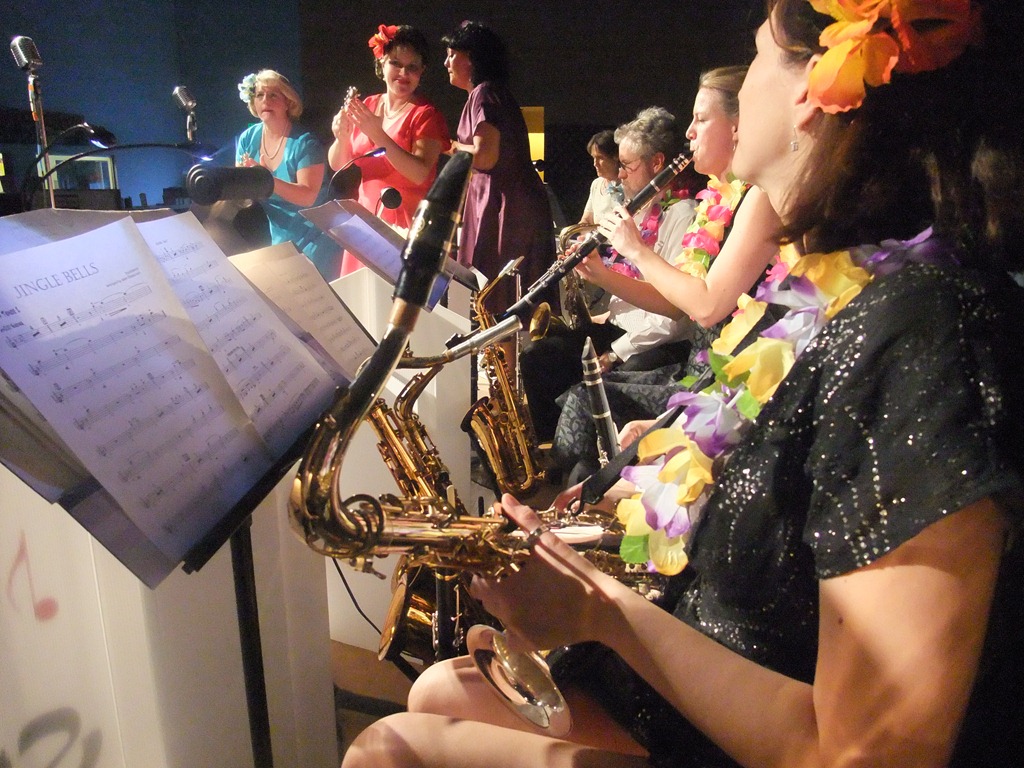
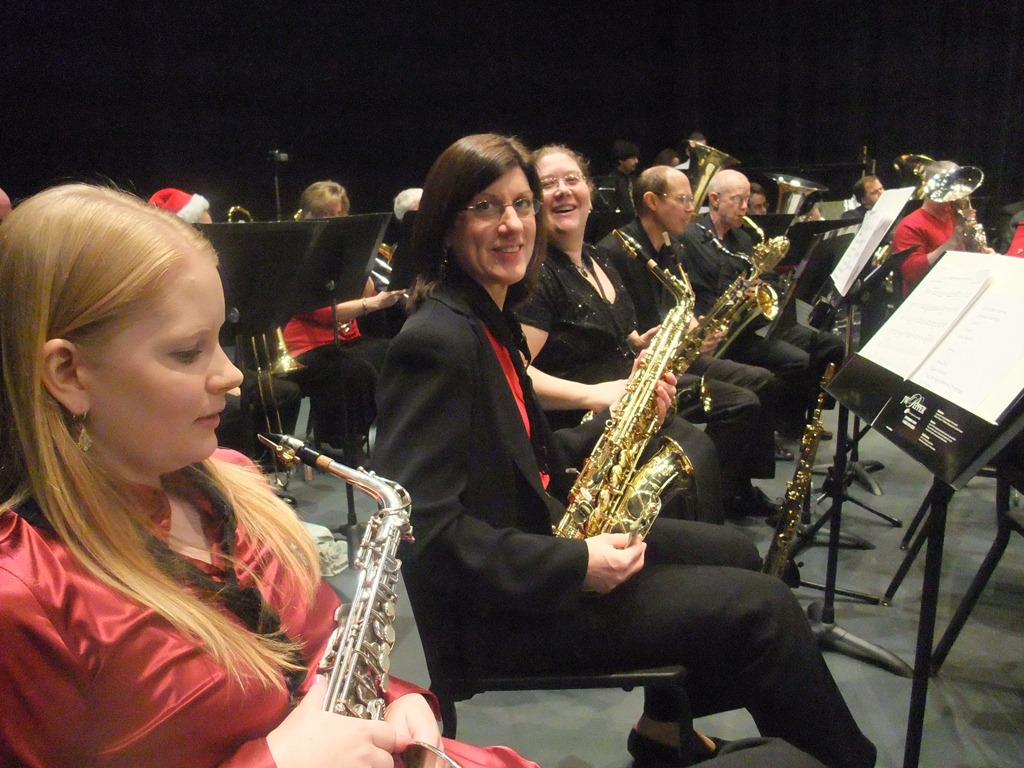
Last night’s In the Mood performance was sooo much fun. In this picture I caught most of the sax section and some of the many singers doin’ their thang. I dreaded this gig and discovered that I luv it! In other theater engagements the band is hidden in a pit. In this “USO of days gone by” production, the band is front and center, laughing with the jokemen, swooning to the singers, playing killer vintage music, and even participating in some of the skits. I hope, I hope, I hope I get invited back again in the future. I luvs these guyz.

DSCF1402

Pictured from right to left, Lise Sexton, Jamie Clarke, Doug Gallagher, and the singers including Robin Hilt in red.

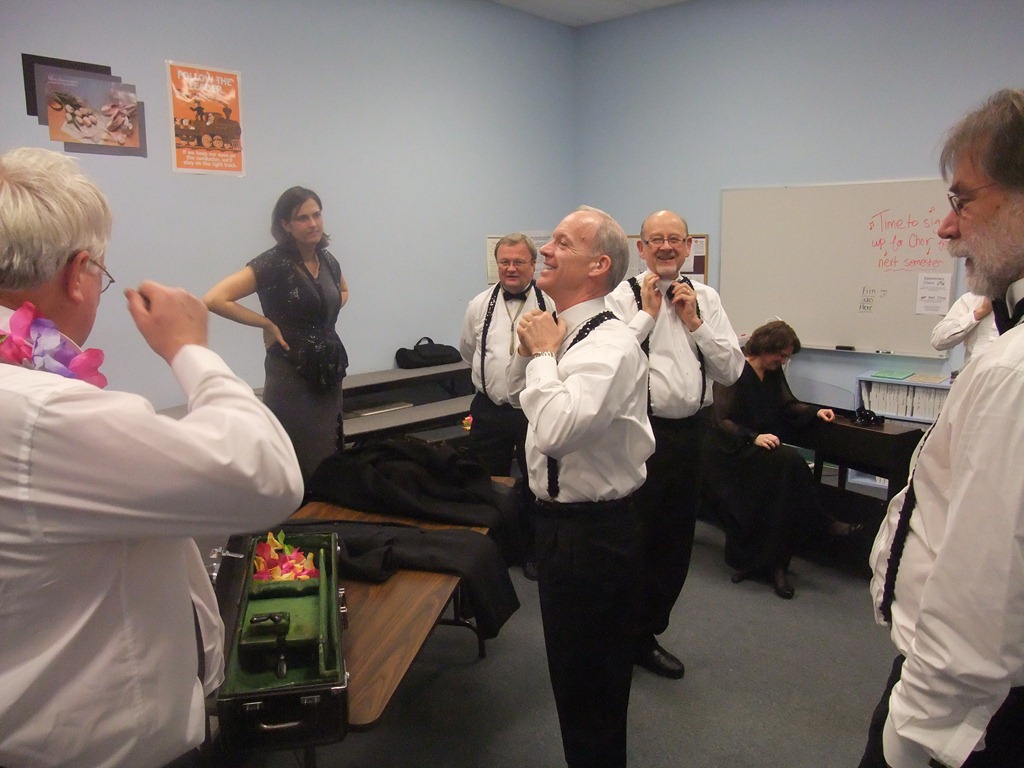
Here are some shots I got by wandering in the back rooms of the theater. Click on them for the bigger sizes:

DSCF1404 DSCF1406 

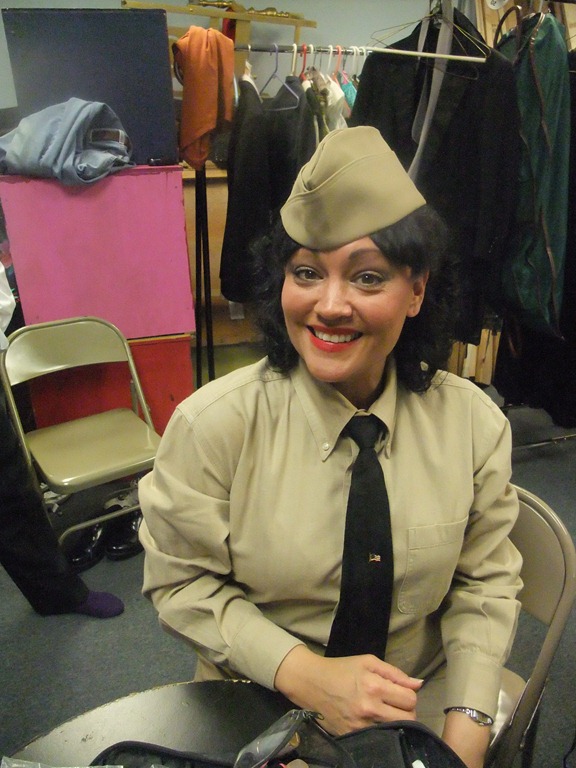
Band room and singer extraordinaire, Robin Hilt.

DSCF1405

The singer/actor’s dressing room.

DSCF1409 DSCF1411 DSCF1412

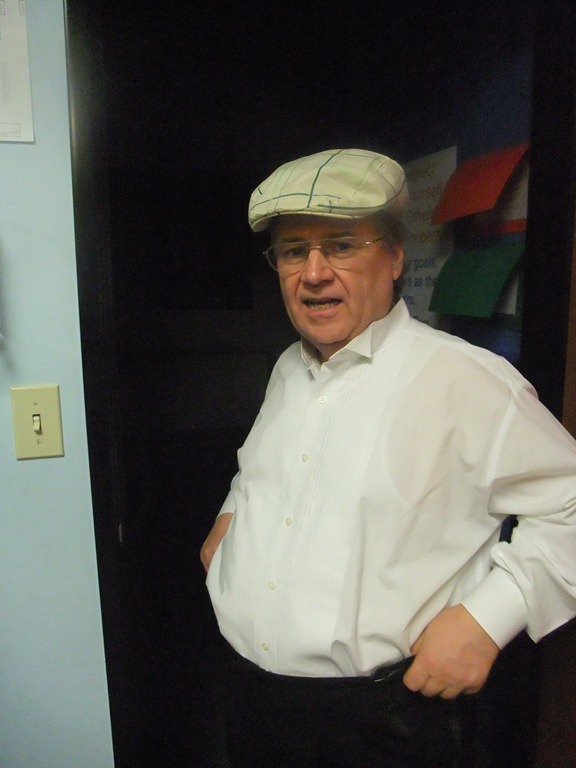
More singers and the show manager/singer/actor/ and musician Terry Simon.

Posted in Band, Holiday, Humor, Music, Theater | Tagged , , , , , | 2 Comments

WCB Holiday Wrecking Crew

The WCB concert on Saturday was awesome. We brought the house down, the musical wrecking crew that we are. There was the reading to music of the Night before Christmas, the bass sax solo to Ward Baxter’s Grinch, and the brass choir. Here is the one picture I have so far from the even, which I really like on a number of levels. Sleep well Team Sax, ya done well.

DSCF1397

From left to right: Principal alto saxophonist Molly Pond, alto saxophonist Barb Grinberg, alto and sop saxophonist Vanessa Armstrong, tenor John Gess, and baritone sax James Borthen. Yours truly on bass and alto sax took the picture. Smile for the camera peeps.

Posted in Band, Holiday, Music, Saxophone, WCB | Tagged , , , , , , | Leave a comment

Music du Jour: Rhapsodie for Saxophone

Saxophonist Joonatan Rautiola regales us with his interpretation of this André Waignein work.

Classical Sax for the Uninitiated

A rhapsody is a poem or a musical piece characterized by a style consisting of loosely related fragments. The movements are linked by a theme. This truly describes this video.

image

Posted in Classical, Music, Saxophone, Video | Tagged , , | Leave a comment

Full Boehm Clarinet in a modern world

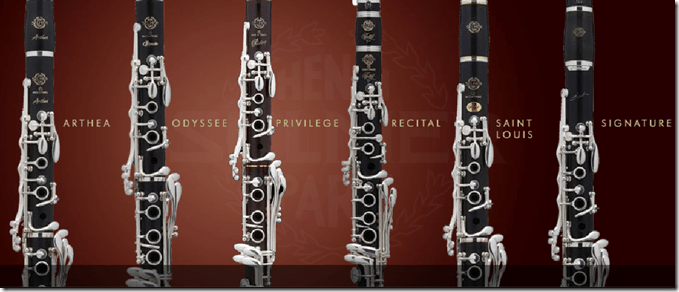
Terry Stibal in 2006 reviews your full Boehm clarinet options. For many years, Selmer offered the complete line of clarinets, as did Heckel, Leblanc and Buffet. However, that has changed and now you are quite limited as to extra keywork.

Selmer has not listed the options for at least twenty years. I don’t ever recall the Recital being offered with anything more than a LH Eb/Ab lever; if it is, then I’m ready to buy my next set of horns as I really, really, REALLY like the Recital model, even if it does feel like you’re holding an alto clarinet.
Leblanc has not offered the full spread of options for at least the last fifteen years. You can pick and choose some (like the LH lever and the features of the “Big Easy” horn), but not the whole schmear like you once could.
Buffet I haven’t been a follower of until the Internet came along (once upon a time, the only way you could learn about stuff involved actual physical presence at the showroom or reading a catalog, believe it or not), but I know that they don’t offer them currently.
• At this point in time, Heckel is out of the clarinet game completely. (At one point they made both French and German style clarinets, with all of the various keywork options; their catalog page is reproduced in Geoffrey Randall’s The Clarinet if you are interested.) Probably something to do with excess maple sawdust accumulation…
Amati offers the “full Boehm” option, but I can’t say that I’m happy with the quality of fit and finish on my one Amati pro horn (an Oehler “system” top of the line model). Based upon my horn, I’d put the Amati “pro” quality at a level equal to Noblet or Signet horns. Fit and finish is just not as good as on the French horns, and I’m still not satisfied with the tone hole undercutting (or lack of same).
• To my knowledge, Yamaha has never offered anything beyond the LH lever. But, they’ve been too concerned with pianos, sound systems, vibrators, motorcycles and other arcane stuff like Shinyo suicide motor boat engines to worry about funny clarinets.

image

I have a pair of Selmer Series 9 “full Boehm” horns, and I’ve been happy with them for many, many years. I play a lot of shows, and they are very handy to have in the extreme keys that you find there on a routine basis. Obviously, the Bb gets a lot more use than the A (which is in pristine condition), but both have been nice to have over the years.
While it’s not necessary to often use the low Eb “extension” on the Bb since I have an A soprano right there in the same box, I find that the placing of the emission hole for B/E on the body of the instrument gives a much more “regular” tone to the middle of the staff B. Even the best of R13s have some inconsistency there. The ability to smoothly trill from Bb upwards is just a nice benefit.

For the rest of the features, I find that I use the LH Eb/Ab lever all of the time, the articulated G#/C# all of the time, and the fork Bb/Eb about two thirds of the time.
(The articulated G# comes with two other advantages:

  • First, it has the automatic advantage of doing away with the occasional “blips” in fast passages “on the keys” (rather than “on the holes”), where the LH little finger coordination may not be at 100%. Having to move the LH little finger in opposition to the rest of the hand and then rapidly back the other way when playing the sequence B/C# can be a problem. Not with the articulated G#; the little springs do all of the thinking for you.
  • Second, the hole for the key operated by the G#/C# touch piece is located in the center of the top of the instrument. No more gurgling and blowing out the perversely located tonehole normally found on French clarinets on the back side of the instrument. (The Rossi (I think) system also has this hole relocated, by the way.)

As the articulated G# setup is duplicated both on all modern saxophones and on all professional bass clarinets (and the Eb/Ab lever is duplicated on professional bass clarinets), they are two more bits of consistency in a largely inconsistent world. You do lose one fingering for high F in the altissimo on soprano clarinets, but as 95% of my time on clarinet seems to be spent below high C, that’s not much of a sacrifice.

Maintenance of the “difficult” articulated G# key would be an issue but for the fact that 99.9999% of the saxophones seen today have the same setup with the same problems. If you are going to a repairman who can’t handle the articulated G# issues, then you probably need to find a new repairman, at least for your saxes.

image

Overall, I have fewer maintenance issues with my “complicated” clarinets than I do with my “bog standard” saxophones. Other than the occasional misalignment issue with the long rods and keys on the lower joints, they work just fine as is. You can encounter “sticking” with the articulated G# due to the opposed spring arrangement, but a cork pad on the flippy little key will correct that right quick.

Incidentally, if you play a modern bass clarinet, you are already using one of the “full Boehm” features. The low Eb key was added in the late 19th Century to enable bass clarinet players to play A bass clarinet parts without having to tote around a matched pair of bass horns. Bass clarinets from earlier in the period (and some Buffets from as late as 1910) did not have this key.

All too often people forget that, before he came up with the saxophone, Adolphe Sax first made the modern bass clarinet what it is today. Smart guy…

Terry L. Stibal
Leader of Houston’s Sounds Of The South Dance Orchestra
Offering the music of yesterday, today and tomorrow…the way you want to hear it!
Visit us at www.sotsdo.com

Posted in Band, Clarinet, Education, Music Instruments, Vintage | Tagged , , , , | 7 Comments

Baby it’s cold outside

BabyCoolI am taking a day off to prepare for a weekend with three concert gigs. In between cleaning the mouthpieces, setting the reeds, and practicing the gnarly parts, I am looking for some music to highlight in next year’s concert season for the Microsoft Jazz Band. One of the charts I discovered and luv is Baby it’s cold Outside by those fabulous folks at Cabot Music in the UK. Click on the link and start the audio while you read this post.  Smile

I really can’t stay, but, baby, it’s cold outside,

I’ve got to go ‘way, oh, baby, it’s cold outside,

This evenin’ has been, been hopin’ that you’d drop in,

So very nice, I’ll hold your hands, they’re just like ice.

My mother will start to worry, beautiful, what’s your hurry?

ClicksGirlMy father will be pacin’ the floor, listen to that fireplace roar,

So really I’d better scurry, oh, beautiful, please don’t hurry,

Oh, maybe just a half a drink more, why don’t you put some records on while I pour?

The neighbours might think, oh, baby, it’s bad out there,

Say, what’s in this drink? but there’s no cabs to be had out there,

I wish I knew how, your eyes are like starlight now,

To break this spell, I’ll take your hat, your hair looks swell.

I ought to say no, no, no, sir, Mind if I move a little closer?

At least there will be, oh, but I tried, ah heh, What’s the sense in hurting my pride?

I really can’t stay, baby, don’t hold out,

ShazDanceAh, but it’s cold… out… side.

We don’t have a male vocalist because I luv to give our singer Shaz as many songs as I can, 6 to 8 per gig. But I happened to hear our lead alto Mark sing last night and thought, he could so do this duet and maybe even mimic Tom Jones! What a fun number this would be. Picking exciting music for my bands is very exciting for me and a labor of luv. Wonder if it’s a genetic predisposition thang?

Posted in Band, Band Management, Big Band, Female vocalists, Jazz, MJB, Music, Too Spicy for some, Vocalist, Xmas | Tagged , , , , , | 2 Comments

Book Review: The Sensuous Dirty Old Man ~ Isaac Asimov

image

Last year I purchased this book from Amazon on a whim because of its quirky title. I must admit that the fact that Isaac Asimov wrote this was also compelling. Something was not right, so I was curious to read this book. My copy was by Signet; Sixth Printing edition (June 1, 1972). I discovered the hilarity and wit that Dr. Isaac Asimov can convey.

Oliver Wendell Holmes, the great Supreme Court Justice, in his last years (he lived to be ninety-four), was walking down Pennsylvania Avenue with a friend, when a pretty girl passed. As all dirty old men must, especially when the dignity of the Supreme Court is at stake, Holmes turned to look after her. Having done so, he sighed and said to his friend, “Ah, George, what wouldn’t I give to be seventy-five again?” ~ Isaac Asimov from The Sensuous Dirty Old Man

The very famous quote: “Sex is dirty, if you do it right” is from this book. Tip of the hat to Eolake Stobblehouse for the idea for this post.

Posted in Books, Nude, Religon, Too Spicy for some | Tagged , , , , , | 7 Comments

The Great Flute debate: Open or closed hole

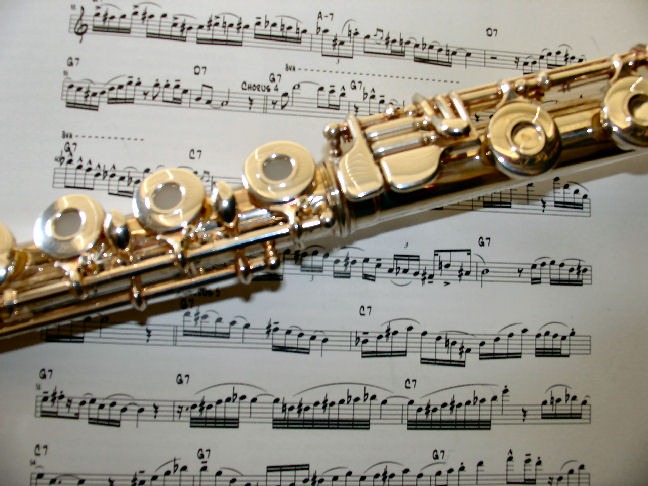
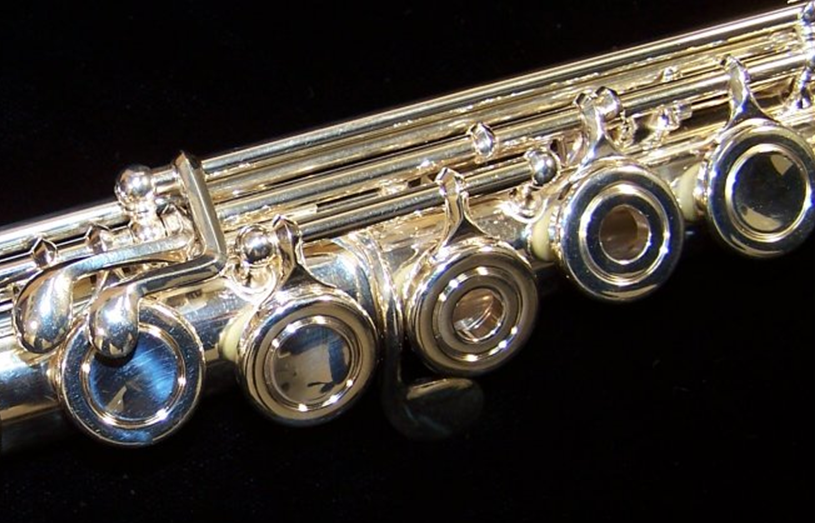
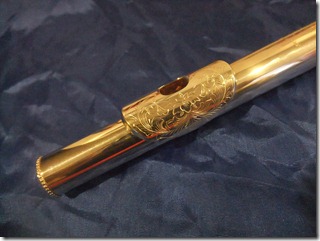
Plugged holesGordon Palmer, a friend of mine who can be found via the contact info at the end of this post recently posted this gem on the Sax on the Web site. I wanted to put it here for my many sax friends who, like me, struggle with doubling on the flute. I plugged my flute key holes and shortly thereafter my wife, the purist, acquiesced and did the same with her flute—it just made too much sense. I have included a picture of my plugged hole Gemeinhardt and an open holed Gemeinhardt flute from the Kessler Music collection.

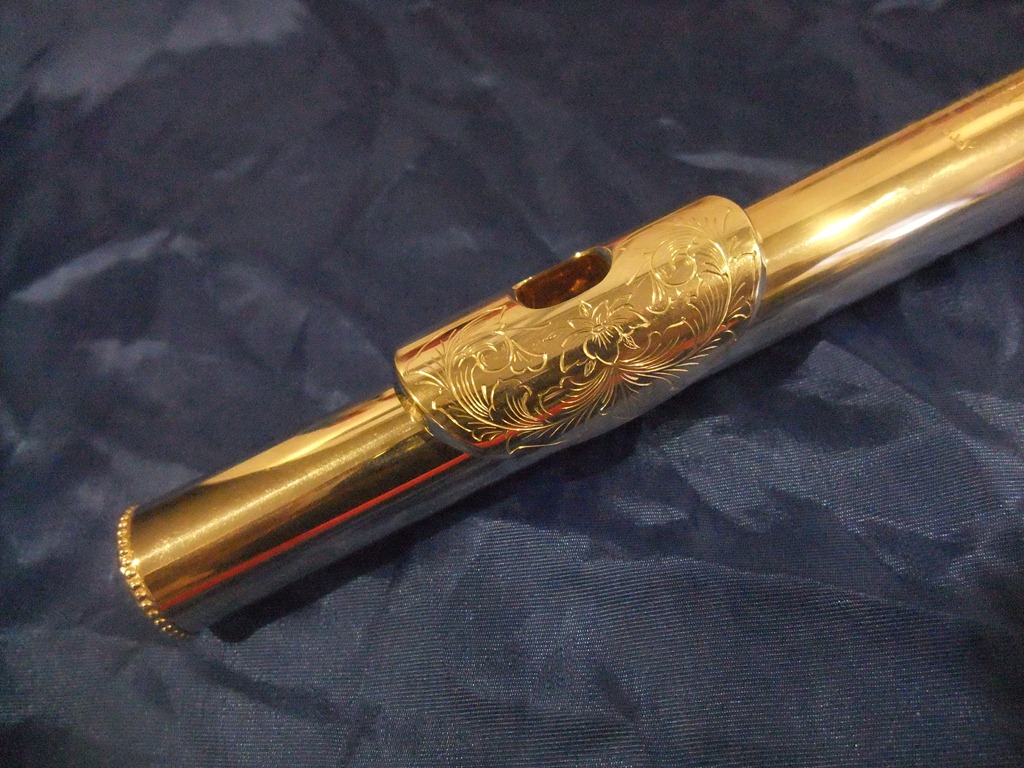
So before we wade into the great open holed flute debate, let me say that purchasing a custom head from Kessler Music and done by craftsman Chris McKenna was the best thing I have done to date for my flute playing. All of a sudden the clarion range was possible and making pleasing music was possible. Now all that is left is to start taking lessons and practicing. Now let’s hear from Gordon:

Many reasons are touted for having open holed key works but for perhaps 95% of players they serve no purpose and have significant detractors. Some issues are:

1. Intonation: A flute goes quite sharp when it is played loudly. This can be compensated for (for SOME notes) by partly closing a tone hole. This is possible only with open holes. Alternatively, the pitch can be humoured with special fingerings when playing very softly. However an accomplished player has sufficient versatility in embouchure and air pressure to correct the intonation by other means. Certain alternative fingerings are available to humour pitch with close-hole too.

2. Intonation: Theoretically, the notes which involve open holes are slightly better vented and are theoretically slightly sharper, so the flute maker allows for this in tone hole position or size. However many players on open-hole flutes plug the holes, theoretically putting the flute out of tune. In reality, the venting of holes on a flute is so good anyway, that this intonation effect is probably so small as to be negligible or non-existent.
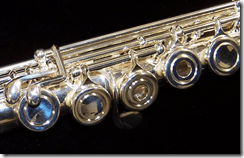
image3. Comfort: Many players plug the holes. One type of plug projects and is uncomfortable, another tends to push through the hole, and both are capable of leaking. Fortunately another very neat metal type is available, at unrealistic expense!

4. Hand position: Open hole encourages an UN-ergonomic position for wrist in order to reliably cover the G key. Some players want to believe so much that the open-hole system is better, that they convince themselves that the distorted wrist position is indeed more natural, but this fails the common sense test. This argument loses weight if the flute, along with the player’s head, is rotated 45 degrees anticlockwise (looking form above) as is common modern practice. The rationale for this rotation is to ease stress on the right shoulder, but often overlooked is that it increases the stress on the neck.

5. Hand position: Some teachers claim that they cannot get pupils’ fingers into ‘good’ positions without the aid of open holes. In answer to that I’d say that I have taught over 400 beginners on closed-hole flutes, and this has not been a problem. It is an issue of good teaching.

6. Finger Position: This so-called ‘good’ finger position has the balls of the fingers (under the nails) centred on the key cups. If the fingers are not perfectly centred on the keys (much frowned upon!) what is the big deal, really? Bagpipers and recorder players have no problems with fingers projecting well over the holes. And there are few keys on a saxophone and piccolo where the fingers are central.

7. Acoustics/Intonation: From “The Flute Book – A Complete Guide for Students and Performers” 2nd edition, By Nancy Toff (1996): “…Many acousticians – Dayton C. Miller and Arthur Benade are perhaps the most prominent of them – consider the plateau model acoustically superior. They brand the open holes a significant flaw, ‘the one acoustical crime that has been perpetrated against the Boehm flute,’ in Miller’s words. Flute maker Albert Cooper (the legendary flute maker and creator of the now modern scale – the Cooper Scale) considers the French model’s scale inherently less accurate because it overcompensates for the sharpening effect of the perforations.

8. Acoustic theory: There should be as little interruption to the bore as possible… Open hole introduces a further step, up from the bore to the pad, and then up again to the finger.

9. Acoustic theory: The bore should be of a hard material to effectively define the vibrating air column… The washers and screws of a closed-hole pad are far harder than the ‘squishiness’ of a chimney of air leading up to a soft

10. Servicing: The standard way of adjusting the way a pad closes on a tone hole is by ‘shimming’, which is inserting paper spacing washers or partial washes behind the pads. For this process a pad may need to be taken out and put back many times. During pad removal a pad is far more likely to be distorted or damaged during if it is on an open-hole key, where there is a difficult-to-remove pad retaining grommet.

11. The pad retainers for open-hole flutes are far from being an ideal method of retaining pads. They are prone to leaks. Splits are not uncommon.

12. Perhaps most important of all – Leaks! My finger skin is hard, but not very hard. Air leaks badly along my finger print grooves on open-holed keys. Try this test: Cork the lower end of the body of an open-hole flute. Close the keys with the fingers and ‘squirt’ a mouthful of air gently into the other end. An open-hole flute will leak unless the fingers are pressed quite hard – harder than a player should need to press. If the fingers are wetted before the test, then air can be heard bubbling out of the fingerprint grooves in the skin. This is not an issue of not covering the holes properly. It is a result of low finger pressure on a large area of skin. Skin simply is not flat, and therefore does not seal well. This phenomenon is worse when the key cup surface is smooth, without ridges around the open hole.
What on earth is the use of adjusting a flute to be leak-proof for good response, and then introducing finger leaks by having open holes! The response of a flute is extremely sensitive to even the tiniest leaks.

13. Finger Contortions. For people with a short right pinkie relative to the D finger, contortions are needed to play low C or low B without introducing a leak under at lest one of the three right hand open-holes. Again the flute is not ergonomic.
ChrisMcKennaHead14. Tone: It is claimed that the extra venting offered by open-holes improves the tone. Pause to think about this. Of the twelve notes in an octave, there are only five where open holes contribute to venting. Have you ever heard of a player saying how their Bb, A, F#, F, & E have a better tone than the other notes? An emphatic NO! Therefore the notion of better tone is bunkum! But sincerely believing such things is part of the human condition!

15. With open-holes, a wider range of unusual effects are available, such as warbling notes, 1/4 tones, slides from one note to another, two notes sounding at once, etc. Perhaps only 2% of players ever use these, especially after the experimental novelty wears off. There are plenty novelty effects available on a closed-hole flute for the one-time experimenters to play with.

16. Open-hole flutes usually cost slightly more. So it is my guess that when buying a flute, the typical player, encouraged by a teacher, assumes that because the flute costs more it must be better. The buyer can stretch his/her budget that little extra, so open hole is what he buys. Or it could be simply that the cheapest student flutes are not offered in open-hole versions, so it is assumed that open-hole makes a superior flute.

So, in spite of having played an open-hole professional flute for a decade, I changed back to the more desirable closed-hole flute to avoid all these problems. Choosing open holes seems to be largely a ‘fashion’, or prestige-driven thing, nurtured by teachers and marketers who have not really thought much about it, and supported by manufacturers who oblige the market.

The inclination towards open holes is much stronger in some countries than others; America seems to have rather unquestioningly adopted the idea from the French. There are many superb players in the world who do indeed play on closed-hole flutes.

There is a common notion that manufacturers do not offer closed holes in their top models. This is far from the truth. The truth is that many market outlets have never offered the closed-hole options that the manufacturers offer. Perhaps it is simply so they can carry a smaller range of models in stock.

In the final analysis, it is difficult to change with reason, what a person has come to believe is better. A player plays on what makes him happy.

About Gordon Palmer:

I have not written any sort of book, other than the 10000 odd posts on SOTW. My teaching sites are:

First Note From a Flute: http://www.saxontheweb.net/Resources/FluteLessons2.html

Flute Lessons by Email: http://www.saxontheweb.net/Resources/FluteLessons.html
Posted in Education, Flute, Music Instruments, SOTW | Tagged , , , , , | 5 Comments